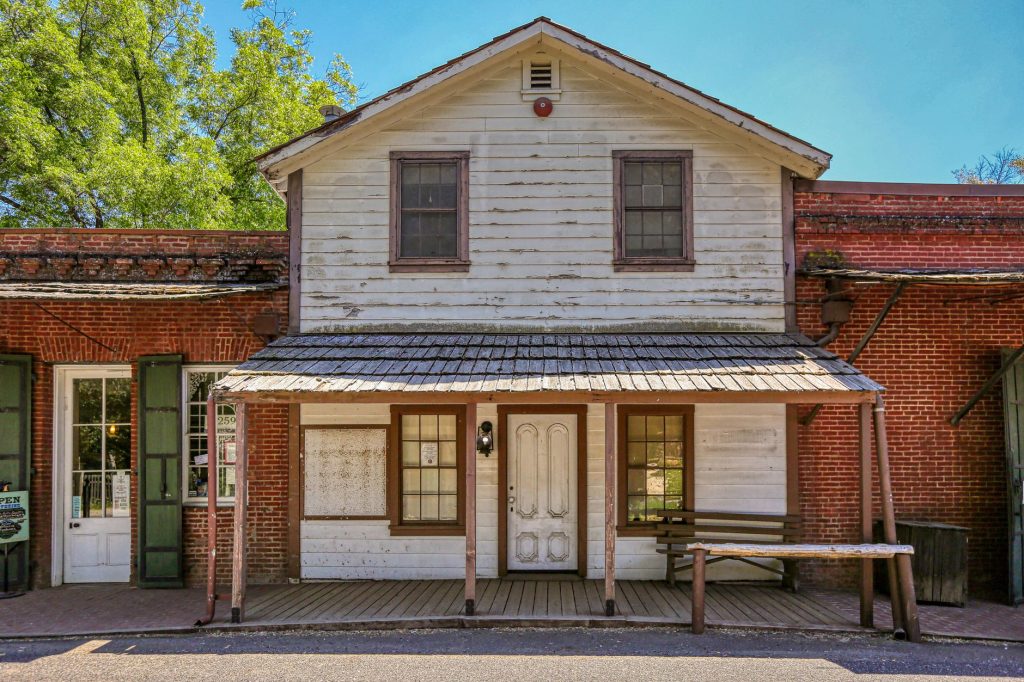
Scott Joplin was born in Texarkana in 1868, and for a long time the city did almost nothing about it. The Scott Joplin Birthplace Museum on Texarkana’s north side is the correction — a small, focused institution that opened in the early 2000s and has been quietly doing the work of documenting the composer’s life ever since. The building itself is a reconstruction near the original site at the corner of Wood Street, and it pulls no punches about the modest circumstances Joplin grew up in.
You’ll spend maybe 45 minutes to an hour here, which is about right. The rooms are not oversized, and the exhibits move chronologically from Joplin’s early years in Texarkana through his St. Louis period, his time in Sedalia, Missouri, and finally New York, where he died in 1917 — largely forgotten, years before ragtime got its critical due. Panels are well-written without being academic. There’s sheet music on display, period photographs, contextual material on what it meant to be a Black musician working around the turn of the last century. None of it is dressed up beyond what it needs to be.
The piano in the main exhibit room tends to stop visitors for a minute. Somebody is usually willing to let you sit down and pick out a few bars of “Maple Leaf Rag” if you have the nerve. Most people don’t, but the invitation is genuine. If you happen to visit during one of the occasional live performance events — check the museum’s calendar before you go — you’ll hear what the music actually sounds like when it’s played correctly, which is something a recording doesn’t fully convey.
Admission is modest, usually a few dollars for adults, less for children, though it’s worth calling ahead because hours can vary depending on staffing and the season. The museum is run largely on community support and doesn’t have the budget of a big-city institution. That’s both its limitation and part of what gives it a certain sincerity — nobody here is performing for tourists. The docents know the material and tend to be direct about the gaps in the historical record, including the fact that the exact location of Joplin’s birth is approximate.
The surrounding neighborhood on the Arkansas side of the city doesn’t offer much in the way of dining or retail right next door, so plan to pair this with something else if you’re making a day of it. The drive over from downtown State Line Avenue takes about ten minutes. Parking is not an issue.
What you won’t find here is spectacle or sentimentality. The museum treats Joplin as a historical figure of genuine consequence — which he is — rather than a civic mascot. He invented syncopation as a formal structure in American popular music, influenced Gershwin and Stravinsky, and spent the last years of his life trying to get his opera Treemonisha produced, which it wasn’t, not in his lifetime. That part of the story is in here too. The museum doesn’t skip the hard ending. It’s a better place for it.