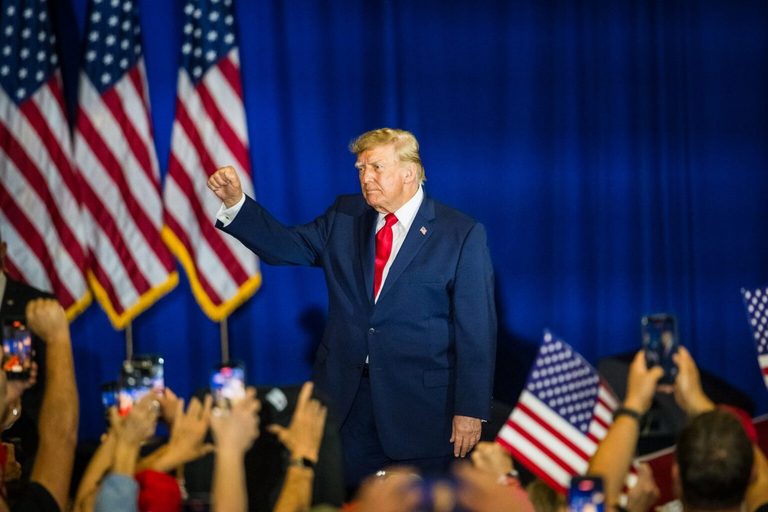
Election administrators in Denver, Michigan, California and dozens of other jurisdictions are conducting emergency drills this week after comments from Homeland Security Secretary Markwayne Mullin and President Trump raised the specter of federal involvement at the polls. Denver Mayor Mike Johnston, a Democrat, warned that residents should not be afraid to vote, noting that the president’s rhetoric appears aimed at sowing doubt about the election process.
Local officials plan for “federal misbehavior”
Barb Byrum, the county clerk in Ingham County, Michigan, said her office has moved from traditional tabletop exercises for power outages and tornadoes to rehearsing responses to possible federal actions. “It’s really unfortunate that’s where we are. But that is, in fact, where we are,” she told reporters.
Similar preparations are under way in Denver, where city officials sued after Mullin suggested Immigration and Customs Enforcement could serve warrants at polling sites. The lawsuit argues that such actions would intimidate voters, particularly in a city where roughly 14% of residents were born abroad.
Administration’s position
The White House, through spokeswoman Lauren Bis, reiterated President Trump’s view that the nation must act now to secure elections, stating, “President Trump is absolutely right: we fix this now, or we lose our country.” The administration also highlighted a recent Supreme Court decision allowing states to use a Homeland Security database to identify possible non‑citizen voters, arguing the tool helps protect election integrity.
Homeland Security has repeatedly denied any plan to target polling locations. In an unsigned statement to States Newsroom, the department said Secretary Mullin has answered questions about ICE warrants “dozens of times” and emphasized that ICE agents are part of trained special‑response teams that assist local law enforcement when needed, regardless of location.
Trump’s own comments
When asked by TIME magazine whether he would consider deploying ICE or declaring a national emergency to influence the midterms, President Trump answered, “I don’t rule anything out or in. We’ll see.” The president’s refusal to categorically dismiss extreme measures has fueled anxiety among election officials who fear the possibility of armed federal personnel at the polls.
Defense Secretary Pete Hegseth dismissed speculation about troops at voting sites as “another gotcha hypothetical,” while some Republican lawmakers, such as Rep. Mike Collins of Georgia, said they would welcome military assistance if state and local authorities requested it.
Polls and public confidence
A University of California‑San Diego survey of more than 5,000 adults in early September found that only 49% of respondents expect the midterm elections to be free and fair. Despite this, experts stress that the United States’ decentralized election system—run by state and local officials—provides strong safeguards against large‑scale interference.
David Becker, executive director of the nonpartisan Center for Election Innovation & Research, told reporters, “It’s not going to happen. You’re not going to have to run a gauntlet. You’re not going to see troops or armed individuals at the polls.” More than 1 million votes have already been cast by mail, according to the University of Florida’s Election Lab, further reducing the likelihood of any on‑the‑day disruption.
Legal and legislative context
Secretary Mullin recently asked the Department of Justice to investigate whether ballot‑tabulation machines that read barcodes or QR codes comply with federal law, raising concerns that the administration could use technical issues as a pretext to challenge ballot validity. The Georgia State Election Board has also urged the DOJ to intervene over QR‑code tabulators.
While the Trump administration continues to push for tighter voter‑verification measures, critics—including California Attorney General Rob Bonta—characterize the president’s approach as desperate. Bonta said, “A desperate Trump is a dangerous Trump,” during a recent appearance at the Center for American Progress.
Election officials remain confident that courts would swiftly block any unlawful deployment of federal agents, and that the existing legal framework protects voters’ rights. Nonetheless, the heightened rhetoric underscores the importance of local preparedness and vigilance as the nation approaches Election Day on Nov. 3.
Original reporting: KTVZ (Central Oregon) — read the source article.