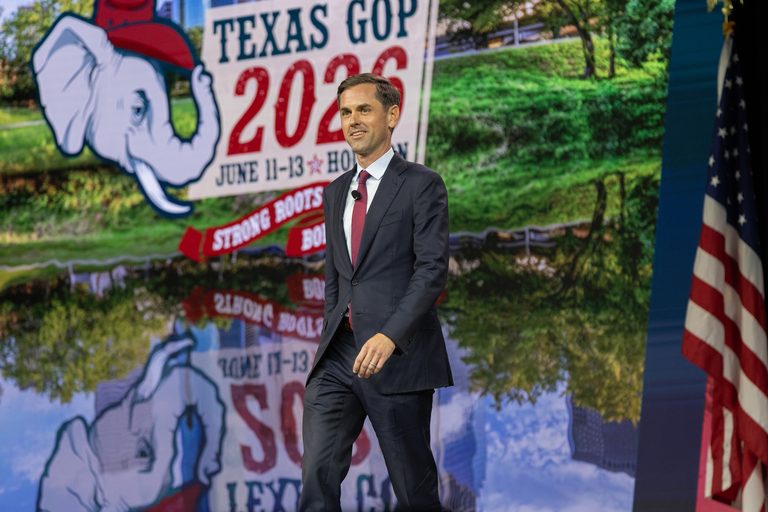
Galveston state Senator Mayes Middleton has entered the race for Texas attorney general, positioning his campaign around a clear Christian vision for state government. At a recent Faith Fest event hosted by the Texas Values advocacy group, Middleton told attendees that “our rights come from God, not government” and pledged to “put God back in government” if elected.
Legislative record on religion in public schools
Middleton’s push for a more overt Christian presence in public life dates back to his time in the Legislature. Earlier this year, a group of parents sued over a new state law that required public‑school classrooms to display the Ten Commandments. While a federal judge blocked the law in eleven districts, citing a 1980 Supreme Court decision that struck down a similar Kentucky statute, Middleton continued to champion the measure. He donated Ten Commandments posters to his home Galveston school district and, after the district hesitated, Attorney General Ken Paxton sued the board, resulting in a court order to hang the signs.
Middleton has also backed legislation to allow prayer time during the school day and to permit religious chaplains in schools. The chaplain bill, which he helped pass, now places six chaplains in four Texas districts, according to state data. Critics, including Democratic Rep. James Talarico, warned that the bill could open doors for “unqualified religious fanatics” to influence students.
Endorsements and opposition
The candidate has earned strong support from the Christian right. Former Texas GOP chair David Barton, a leading figure in the movement to embed Christianity in public policy, endorsed Middleton as a “man of sincere Christian faith” and urged Christians to mobilize at the ballot box.
Conversely, religious‑freedom advocates and non‑Christian groups have voiced serious concerns. Annie Laurie Gaylor, president of the Freedom From Religion Foundation Action Fund, warned that Middleton would treat non‑Christians as “second‑class citizens” and use the attorney general’s authority to erode the separation of church and state.
State Senator Nathan Johnson, Middleton’s Democratic opponent, called the candidate’s views “not fit to be the top legal officer of the state,” noting that “250 years of American jurisprudence” could be jeopardized.
Polls and campaign dynamics
Recent polling shows Johnson trailing Middleton by only a few points ahead of the November 3 election, indicating a competitive race. Neither candidate has agreed to a debate, and Middleton has not responded to interview requests from The Texas Tribune.
Trump‑appointed courts and the legal landscape
Middleton attributes recent judicial victories to the Supreme Court appointments made by President Trump. He said, “Our U.S. Supreme Court, thanks to President Trump’s appointments, made it possible for us to win some of these fights and put God back in government.” This framing aligns with the administration’s broader effort to reshape the nation’s constitutional interpretation.
Legal scholars, however, caution that the Constitution’s Establishment Clause still prohibits government endorsement of a specific religion. University of Texas religious‑law expert Douglas Laycock warned that “people like Middleton want the government to actively support not just religion, but their religion,” which could discriminate against other faiths.
What’s at stake
If elected, Middleton would have the authority to shape Texas’s legal battles over religious expression in schools and beyond. Supporters see this as a chance to protect religious liberty, while opponents fear a slide toward a government that privileges Christianity over the state’s diverse population of roughly 10 million non‑Christians.
The race underscores a broader cultural clash in Texas, pitting a growing Christian activist movement against longstanding constitutional protections of religious neutrality. Voters will decide whether Middleton’s vision of a faith‑centered government aligns with the state’s constitutional framework and the pluralistic reality of modern Texas.
Original reporting: Texas Tribune (HLL/CB) — read the source article.