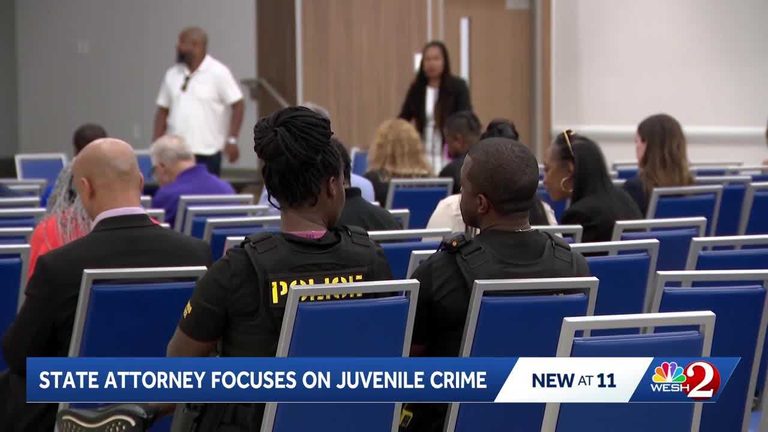
Orange County, Fla. – State Attorney Monique Worrell of the Ninth Judicial Circuit continued her series of “Missing Middle” town halls Tuesday night at the MultiCultural Center, bringing together law‑enforcement officials, county leaders and concerned parents to confront a surge in violent juvenile crime.
Rising arrests and a system under strain
Worrell warned that juvenile arrests in Florida have risen 17% each year since the pandemic began. She noted that the current juvenile justice system is designed for rehabilitation, yet most offenders are released within 18 months – a timeframe she said is insufficient for truly violent offenses.
“For really violent offenses, 18 months isn’t long enough for rehabilitation,” Worrell said. “If we move a youth to the adult system, the sanctions can be 25 years up to life, depending on the crime.”
Addressing the “missing middle”
The town hall series, titled “The Missing Middle,” aims to fill the gap between charging a child as an adult and keeping them in a juvenile system that may not adequately protect the public. Worrell highlighted programs from other states, such as Wisconsin, where juvenile jurisdiction extends to age 25, compared with Florida’s current limit of 21.
She emphasized four pillars for a comprehensive response: education, job‑skill training, therapy, and accountability. “We want to focus on education, we want to focus on job skill training, we want to focus on therapy, and we want to focus on accountability,” she explained.
Community involvement is essential
Parents at the meeting voiced a desire to understand how the root causes of juvenile crime are being tackled. Orange County resident Megan Tajudeen said, “I want to discover how they’re handling the root of the problem, of the juvenile issues that they’re handling here.”
Marni Stahlman, president and CEO of the Mental Health Association of Central Florida, called the situation an epidemic and stressed that solving it will require all stakeholders, including lawmakers. She warned that Florida’s non‑Medicaid‑expansion status and high uninsured rate strain the ability to provide needed mental‑health services.
Cost of care and next steps
According to the Florida Department of Juvenile Justice, the state spends roughly $106,000 per youth per year for residential care, which includes rehabilitation services. Worrell urged the community to support funding and workforce development to expand available services.
The next “Missing Middle” town hall is scheduled for October; date, time and location will be announced later.
Original reporting: WESH Orlando — read the source article.