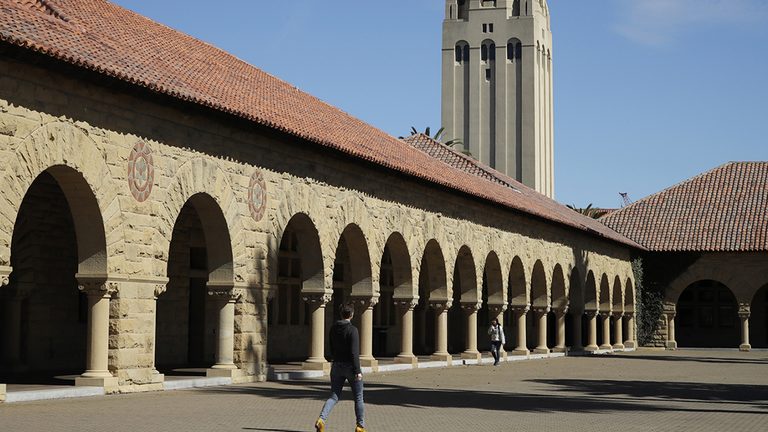
PALO ALTO, Calif. – Stanford University has taken down promotional banners after admitting that artificial‑intelligence software was used to alter a photograph of three students, changing their appearance and race in violation of the school’s AI policy.
Students call the alteration “unacceptable”
Freshman Kavinder Patel said the university’s reputation for attracting a diverse student body from more than 60 countries makes the fabricated changes especially troubling. “Stanford prides itself on diversity and shouldn’t need to fabricate it,” Patel said.
Another freshman, Jacob Peizner, described how the altered image spread quickly across campus and social media, adding, “I have friends all around the school and it’s kind of crazy to think I don’t know who was in charge of it.”
Specific changes spark controversy
Students noted that the original photo showed a Hispanic student, but the AI‑generated version replaced that individual with a Black female student. The visual discrepancy was evident to many who saw both versions.
Billy Ramirez, the student whose face was removed, initially laughed at the situation but later expressed disappointment, saying, “I was also upset because I don’t agree with Stanford making those choices about how we were represented.”
University acknowledges policy breach
In an official statement, Stanford confirmed that the AI alterations violated its AI policy, which strictly prohibits the use of AI to produce or modify images of Stanford people, events, research, facilities, or achievements without disclosure. “We have reviewed the matter and confirmed that AI was used to alter the image in violation of university policy. The banners with the image in question have been removed,” the statement read.
The university also announced plans to provide additional training for staff and to strengthen review procedures for all future materials.
Legal perspective on consent and representation
Zachary Henderson, an assistant professor of law at SMU Dedman School of Law, said the incident raises important questions about consent and how individuals are portrayed when AI is involved. “If I were the student whose body shape and face were changed, I would wonder what consent I actually gave and whether I was harmed by the way I was depicted,” Henderson said.
Student hopes for more authentic representation
Students interviewed expressed a desire for the university to reevaluate its approach to AI‑generated imagery. Peizner noted, “The university has positive and negative policies, and I think they are doing their best to be more inclusive, but they need to be more authentic.”
The incident underscores ongoing debates about the ethical use of AI in higher‑education marketing and the importance of transparency when technology alters visual content.
Original reporting: Allentown News – 6abc Philadelphia — read the source article.