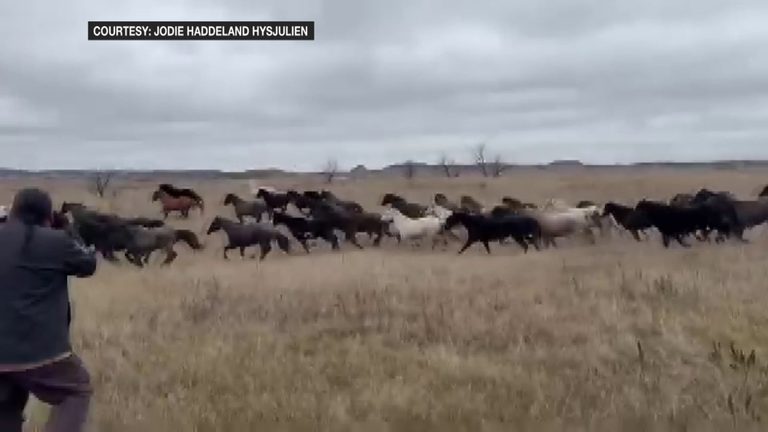
On Thursday morning, the Standing Rock Sioux Tribe gathered in Bismarck, North Dakota, to welcome back a herd of Nokota horses that are considered sacred relatives of the tribe. The ceremony marked a significant cultural moment, reconnecting the community with a breed that traces its lineage to the horses Chief Sitting Bull released after his return from Canada.
Historical roots of the Nokota breed
The Nokota horse is a genetically distinct breed that evolved on the Northern Plains. Tribal leaders say the animals descend from the very horses that Sitting Bull set loose in the 19th century, a gesture meant to adapt to a changing world. Over the decades, the tribe has preserved the breed as a living link to its ancestors and traditional way of life.
Tribal leaders speak
Standing Rock Sioux Tribe Chairman Steve Sitting Bear explained the importance of the return. “These relatives are not only genetically distinct from other horse breeds across the continent but descended from the same horses that Sitting Bull set loose when he returned from Canada. We’ve missed these relatives,” he said.
He added that the horses are recognized as sacred and have long held an important place in native culture and daily life. “By bringing them home, we are taking a step towards reuniting with our ancestors, and healing our traumas,” Sitting Bear stated, emphasizing the spiritual and emotional value of the herd.
Community impact
The arrival of the Nokota horses is expected to bolster cultural education programs, allowing tribal youth to learn traditional horsemanship and the stories that accompany the breed. Local elders anticipate that the herd will serve as a focal point for ceremonies, festivals, and outreach efforts that celebrate indigenous heritage.
Tribal members expressed pride and gratitude, noting that the horses symbolize resilience and continuity. “Our horse culture survived the hardships of the past, and now we can share that legacy with the next generation,” said one community member.
Looking ahead
The tribe plans to integrate the horses into ongoing cultural initiatives, including riding lessons, storytelling events, and partnerships with nearby schools to broaden understanding of Native American history. The restoration of the herd also aligns with broader efforts to protect the region’s natural resources and preserve the prairie ecosystem that supports both the horses and the tribe’s way of life.
As the ceremony concluded, the sound of hooves echoed across the gathering grounds, a reminder that the bond between the Standing Rock Sioux and the Nokota horse endures, strengthening both cultural identity and communal healing.
Original reporting: KFYR-TV Bismarck (news) — read the source article.