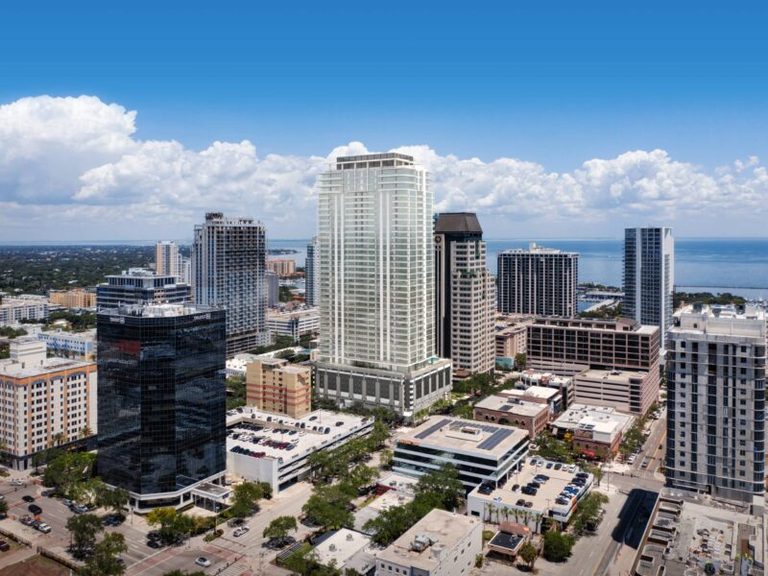
Downtown St. Petersburg’s luxury condo market is entering a more balanced phase as the city’s two newest high‑rise towers, Residences at 400 Central and Art House, work through a surplus of inventory.
Inventory and pricing trends
In September, downtown listings were up about 16% from a year earlier, and homes stayed on the market 27% longer, according to Realtor.com data. The median listing period was 118 days, and properties sold for roughly 3% below asking price on average.
These broader market shifts are reflected in the two flagship towers. Art House, a 42‑story building with 244 units, has only nine condos left for sale directly from developer Kolter Urban. At 400 Central, a 46‑story tower with 301 units, approximately 85% of the residences have already been sold through the developer, according to real‑estate agent Andrew Warren.
Buyer leverage and developer response
Because many purchasers signed contracts years before construction finished, the most recent closings do not fully represent current demand. However, the influx of resale units—15 at 400 Central and 13 at Art House—has given buyers more negotiating power, especially for condos priced between $1 million and $3 million.
Warren noted a recent three‑bedroom developer‑owned condo at 400 Central sold for $1,615,000, about $90,000 below the asking price. Developers are increasingly offering closing credits and other incentives to attract buyers, while some individually owned units above $1 million have lingered on the market for six months or longer.
High‑end buyers remain active
Buyers in the $3 million‑plus segment continue to be active, with stock market performance often influencing their decisions more than mortgage rates. Both Warren and Kolter Urban’s Dave Moyer said local residents make up a substantial share of purchasers, many intending to use the units as primary residences.
At Art House, more than half of buyers plan to live in their condos full‑time, with some upgrading from older downtown buildings and others moving from single‑family homes in neighborhoods such as Old Northeast and Snell Isle. Similar patterns are seen at 400 Central, though many owners maintain multiple homes and may not occupy their units year‑round.
Economic impact and future development
USF finance professor Lei Wedge explained that luxury condo buyers typically have significant savings and investments, giving them flexibility that many working‑ and middle‑class households lack. While the towers generate property‑tax revenue even from part‑time residents, they do little to address the broader shortage of affordable housing.
Rising construction costs, expensive financing, and high land prices are making new large‑scale condo projects more challenging. Will Conroy, president of Backstreets Capital, reported that his company’s 15‑unit Cade Residences near Mirror Lake remain about 40% under contract, a level unchanged since construction began.
Moyer expects fewer large condominium projects to reach completion downtown over the next several years. The Waldorf Astoria Residences, slated for delivery around 2030, and a planned 50‑story tower that reported more than $200 million in presales in June are among the next major developments.
Outlook
With fewer large projects on the horizon, the market may have time to absorb the remaining inventory at Art House and 400 Central, as well as the resale units currently listed. Warren believes buyers and sellers are gradually adjusting after years of rising prices, and he hopes “in a year from now, we’re looking at a more normal market.”
Original reporting: St. Pete Catalyst — read the source article.