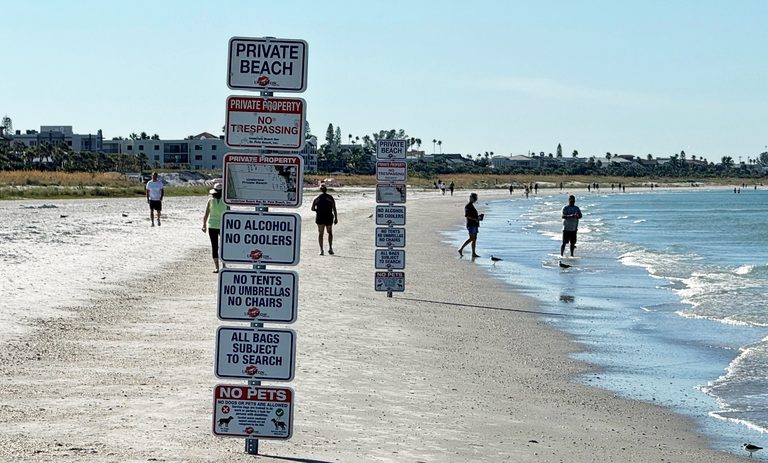
St. Pete Beach is defending its new beach sign ordinance in federal court after a lawsuit was filed by two local businesses. The ordinance, which was approved by the City Commission, prohibits permanent stakes, poles, and similar structures within 50 feet of the Gulf and allows removable A-frame signs outside that buffer under certain conditions.
Customary Use Doctrine
City Attorney Ralf Brooks explained the customary use doctrine, which is at the center of the controversy. According to Brooks, a beachfront parcel can be privately titled while also being subject to public recreational rights established through customary use. The doctrine looks for evidence that public use of a particular stretch of beach was ancient, reasonable, uninterrupted, and free from dispute.
Brooks cited a recent federal court decision involving Palm Beach, where a judge found that the town had established customary use over a 0.4-mile stretch of beach despite more recent trespassing complaints from a property owner. However, Brooks noted that the ruling applies only to that specific section of shoreline and does not establish customary use across Florida.
The city’s legal history with Silver Sands Beach and Racquet Club was also discussed, which challenged a previous customary use ordinance. The case settled before a judge ruled on customary use, and the city later repealed its ordinance while allowing the condominium to keep its existing private property signs.
Resident and Business Perspectives
During public comment, residents and business owners shared their perspectives on how the beach should be managed. One resident urged the city and beachfront property owners to focus on disruptive behavior rather than broad efforts to exclude people from the beach. A representative of local hoteliers offered a different perspective, saying that beachfront businesses welcome residents walking the shoreline but object when non-guests set up chairs, umbrellas, and tents on privately owned property.
Original reporting: St. Pete Catalyst — read the source article.