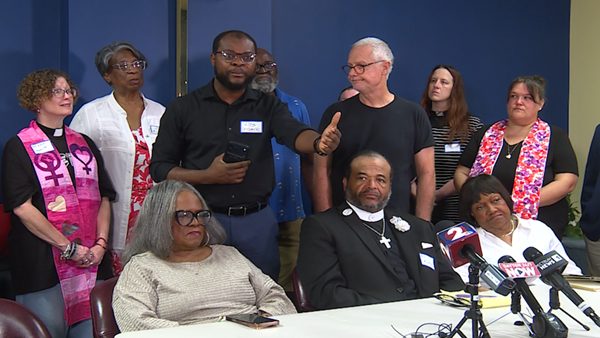
On Friday, Springfield’s faith community convened at the downtown church parking lot to protest recent Immigration and Customs Enforcement (ICE) actions that they say unfairly target Haitian families. The gathering, organized by the Haitian Support Center and local clergy, highlighted the anxiety felt by families who have lost their Temporary Protected Status (TPS) and are now facing arrests and ankle‑monitor requirements.
Community voices raise concerns
Viles Dorsainvil, director of the Haitian Support Center, explained that many families live in constant fear. “If you are asked to appear before a judge, they will show up. If ICE asks them to check‑in, they do that,” he said, noting that the ankle monitors are viewed as a symbol of humiliation. “It just symbolizes slavery,” Dorsainvil added, urging the Trump administration to treat Haitian residents with dignity.
Pastor Carl Ruby, a longtime Springfield pastor, expressed a nuanced stance. While he supports strong border security and the deportation of violent criminals, he condemned the current focus on Haitian families. “We can support border security. We can support the deportation of violent criminals. But we do not support this,” Ruby said.
Calls for federal action
The event’s organizers appealed directly to the Trump administration, asking for an end to the ankle‑monitor program and for humane treatment of Haitian residents who have contributed to the community for years. “We deserve to be treated as human beings, not as animals,” Dorsainvil said.
Although exact numbers of arrests and ankle‑monitor placements were not provided, participants described the raids as daily occurrences that disrupt families’ work and school routines. In response, faith leaders announced plans to march around Springfield City Hall on Sunday afternoon, praying for an end to what they describe as a punitive crackdown.
Legal backdrop
Haitian immigrants originally entered the United States under TPS, a humanitarian designation that was lifted last month, opening the door for potential removal proceedings. The Trump administration has emphasized a firm immigration stance, but local religious leaders argue that enforcement should respect family unity and the constitutional principle of due process.
Advocates stress that the ankle‑monitor program, while intended to ensure court appearances, can impede employment and schooling, creating a cycle of hardship for families already navigating the loss of TPS protection.
Looking ahead
The Springfield faith community hopes the upcoming prayer march will draw broader attention to the issue and encourage federal officials to reconsider the use of ankle monitors as a blanket enforcement tool. By framing the debate in terms of dignity, family stability, and Christian compassion, they aim to influence policy while reinforcing the city’s tradition of faith‑driven civic engagement.
Original reporting: WLWT Cincinnati — read the source article.