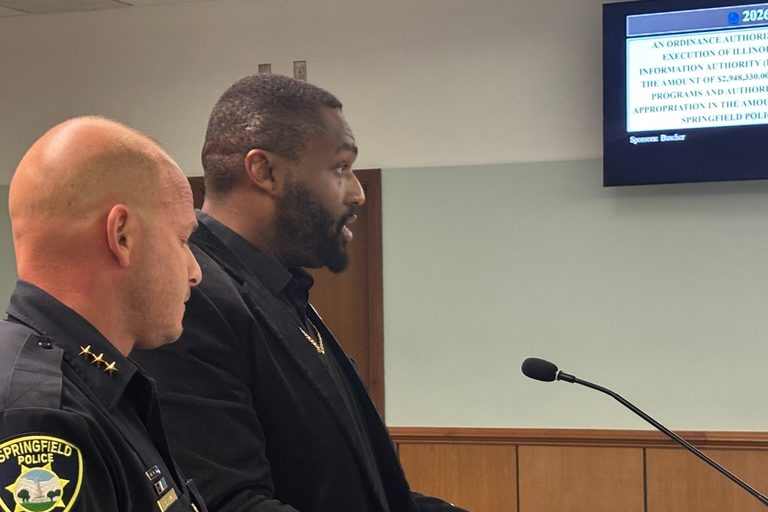
Springfield, Illinois – On Tuesday, the Springfield City Council will decide whether to accept a $2,948,330 grant from the Illinois Criminal Justice Information Authority. The funding is earmarked to expand the city’s co‑responder program, a partnership that pairs police officers with mental‑health professionals and social‑service workers to provide immediate assistance to residents in crisis.
What the co‑responder program does
The co‑responder model was created to address situations where a traditional police response may not be the most effective solution. When a call involves mental‑health concerns, homelessness, or other social‑service needs, a trained mental‑health specialist joins the officer on scene. Together they can assess the individual’s needs, de‑escalate tension, and connect the person to appropriate resources.
City leadership’s view
“This represents another step in what we are going to be able to do to provide assistance to the community and expand even more the realms of mental health,” said Ethan Posey, Springfield’s director of community relations. Posey emphasized that the grant would allow the city to offer rapid‑rehousing options, such as short‑term hotel stays, and provide food vouchers for individuals transitioning out of homelessness.
“Most people facing homelessness don’t have time,” Posey told council members. “Even if it only takes two weeks, this allows us to say, ‘Hey, for that two‑week span as you are going through that coordinated entry into the system so you can get rapid re‑housing, we can put you up in a hotel, so you’re not out in the cold. We have food vouchers.’”
How the grant will be used
If approved, the money will fund additional co‑responder staff, training, and equipment. It will also support a pilot program that places a small team of specialists at the city’s main police precinct during peak call times. The goal is to reduce unnecessary arrests, lower the burden on law‑enforcement resources, and improve outcomes for vulnerable residents.
Community response
Local advocacy groups have praised the initiative, noting that mental‑health crises often require more than a uniformed response. “Having professionals on the scene can save lives and keep families together,” said Maria Delgado, director of the Springfield Community Outreach Center. “It’s a compassionate approach that aligns with our city’s values of family and faith.”
Some council members raised questions about long‑term sustainability, asking how the program will be funded after the grant expires. Posey responded that the city is exploring partnerships with regional health systems and private donors to create a stable funding stream.
Next steps
The council’s vote is scheduled for Tuesday evening. A majority approval will unlock the grant and set the city on a path to expand its co‑responder capabilities. If the measure fails, officials said they would continue to seek alternative funding sources to address the pressing needs of Springfield’s most vulnerable citizens.
Regardless of the outcome, the discussion highlights a growing recognition that public safety and social services are intertwined. By investing in collaborative, community‑focused solutions, Springfield aims to uphold the principles of individual liberty, traditional families, and faith‑based compassion that define the city’s character.
Original reporting: Capitol City Now (WTAX 1240 Springfield) — read the source article.