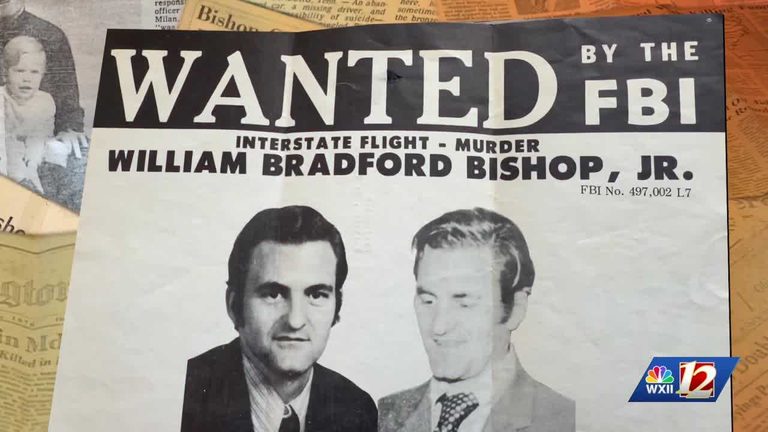
Kathy Gillcrist, a resident of North Carolina who was adopted in the 1950s, never imagined that a simple DNA test would reveal a shocking family secret. In 2017 she sent a sample to 23andMe, hoping to learn more about her biological parents. The results linked her to William Bradford Bishop Jr., a former State Department employee who vanished after allegedly murdering his wife, mother and three sons in Bethesda, Maryland, in 1976.
FBI’s most‑wanted fugitive
Bishop was placed on the FBI’s Ten Most Wanted Fugitives list in April 2014. He is accused of bludgeoning his family to death, transporting the bodies to North Carolina, burning them and abandoning his car before disappearing. If still alive, he would be about 90 years old.
Discovering the truth
Gillcrist said she expected to find a famous ancestor – perhaps a former president or movie star – but instead uncovered a murderer. “The more I hear about him, the scarier it is,” she told WXII, a local sister station, as newspaper clippings and FBI wanted posters spread across her kitchen table.
After receiving her DNA results, a cousin who is a genealogist helped her confirm Bishop’s identity. Gillcrist spent years gathering his journal entries, newspaper articles and other documents, eventually publishing a memoir titled It’s In My Genes during the COVID‑19 pandemic.
Family reaction and future hopes
Despite the horror of the discovery, Gillcrist said she felt a strange mix of shock and dark humor. “I laughed because it was so crazy – I thought I might be related to a famous person, and it turned out to be a murderer,” she said.
She has maintained contact with the FBI, receiving occasional tips from people worldwide who think they have spotted Bishop, mostly in Europe. Gillcrist says the case remains unsolved and the FBI has not closed it.
When asked what she would ask her father if she ever met him, Gillcrist replied, “Did you know you had a daughter? How would that have felt? And if you’re still alive, what do you think about everything that has come forth about you?”
Broader implications
Gillcrist’s story highlights the growing impact of consumer DNA testing on cold cases and missing‑person investigations. Law‑enforcement agencies increasingly rely on genetic genealogy to identify suspects and bring closure to families.
For North Carolina residents, the tale serves as a reminder that personal histories can be far more complex than they appear, and that modern science can uncover truths that were once thought impossible.
Original reporting: WPBF West Palm Beach — read the source article.