Springfield, Mo. – The Springfield City Council met on Monday night to discuss two closely related items that could shape the city’s technology landscape for years to come. The first item is a proposal to extend the existing administrative delay on new data‑center development, which is set to expire on Nov. 17. The second item seeks to add precise definitions for data‑center types to the municipal code, breaking them into three categories: accessory, micro, and large‑load facilities.
Proposed definitions
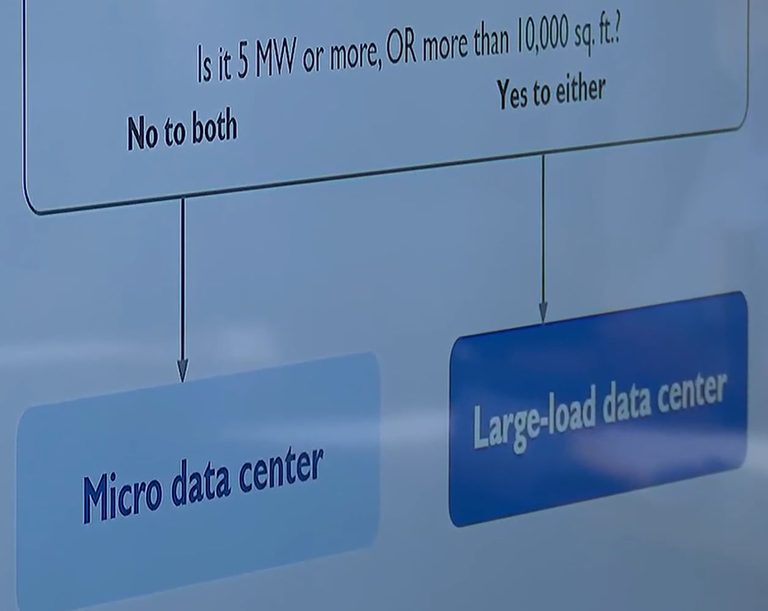
Assistant Director of Planning and Development Justin Crighton explained the city’s draft language. An Accessory Data Center must be located inside the principal building, occupy no more than 20 % of the building’s gross floor area, serve only the owner or tenants, and have a maximum power demand under one megawatt. If a facility fails any of those criteria, it moves to the next test – size and power. A Large‑Load Data Center is defined by either a power demand of five megawatts or more, or a floor area exceeding 10,000 square feet. Anything below both thresholds would be classified as a Micro Data Center.
Public input on definitions
Ten Springfield residents signed up to speak. Cameron Rose, an employee of a local internet provider, argued that the accessory definition is overly broad. “It would prevent us from setting up a fiber hut – a small 8‑by‑10 structure we use to bring service to businesses and residents – because the definition says we cannot provide services to anyone other than tenants or the building occupant,” Rose said.
Extension of the moratorium
The council also heard from resident Ren Bortosky, who supports extending the moratorium indefinitely. Bortosky cited environmental concerns, stating, “We need to put limitations in place either on how many data centers we’re building, which would ideally be zero, or at least on how much energy they’re allowed to use. Every megawatt of energy is more emissions that really don’t need to be put into the atmosphere.”
Council’s next steps
Council members indicated they will vote on both the definition amendment and the moratorium extension at the scheduled Nov. 16 meeting. The outcomes will determine whether Springfield continues to restrict large‑scale data‑center projects while providing clearer guidance for smaller, on‑site facilities.
Implications for the community
Supporters of the extension argue that limiting high‑power data centers protects local air quality and aligns with broader environmental stewardship goals. Critics, particularly small‑business internet providers, warn that the definitions could unintentionally hamper modest infrastructure projects that bring broadband to underserved neighborhoods.
The council’s decision will balance the city’s desire for responsible growth with the need to maintain affordable, reliable internet access for residents and businesses. As Springfield continues to attract technology firms, the clarity of these definitions and the length of the moratorium will be key factors in shaping the city’s economic and environmental future.
Original reporting: KY3 Springfield (local) — read the source article.