Oklahoma voters will hear a stark contrast of viewpoints on the upcoming November 3 ballot as the two leading gubernatorial candidates discuss whether school‑board candidates should disclose their party affiliation.
Republican Mazzei pushes for transparency
Mike Mazzei, the Republican hopeful, says parents deserve to know the political outlook of those seeking seats on local school boards. “Going forward, school‑board candidates are really going to need to designate whether they’re a Republican or a Democrat, so parents know the worldview of these folks that want to lead our local schools,” Mazzei told reporters.
He also wants to move school‑board elections from the low‑turnout February‑March dates to the general election in November, when voters already turn out for governor and president. “Right now, the conservative parents of Oklahoma don’t really get much of a say in the school‑board leadership and the superintendent leadership. They’re the ones who pay for the system. By golly, they expect excellence, and they’re not happy with the fact that we’re 49th in education and only 27% of 8th‑graders can read,” Mazzei added.
Democrat Munson defends nonpartisan races
Democratic candidate Cyndi Munson counters that school‑board elections should remain free of party labels. “I have not supported the move to put our school boards on the general ballot because they do not need to be partisan,” Munson said.
She blames former State Superintendent Ryan Walters for Oklahoma’s low ranking, stating, “Our former state superintendent, who politicized and played way too much into the politics instead of focusing on our public schools, is part of why we are and remain 50th in the nation for public education.” While we respect Munson’s focus on community‑driven improvement, we disagree that eliminating party identifiers will solve the systemic challenges Oklahoma schools face.
Why the debate matters to families
Both candidates agree that Oklahoma families deserve a high‑quality education, but they differ on how to achieve it. Mazzei’s proposal aims to give parents a clear signal of a candidate’s values, aligning with the belief that informed voters make better choices. Munson emphasizes local, nonpartisan solutions, arguing that school‑board members should be motivated by community needs rather than a partisan agenda.
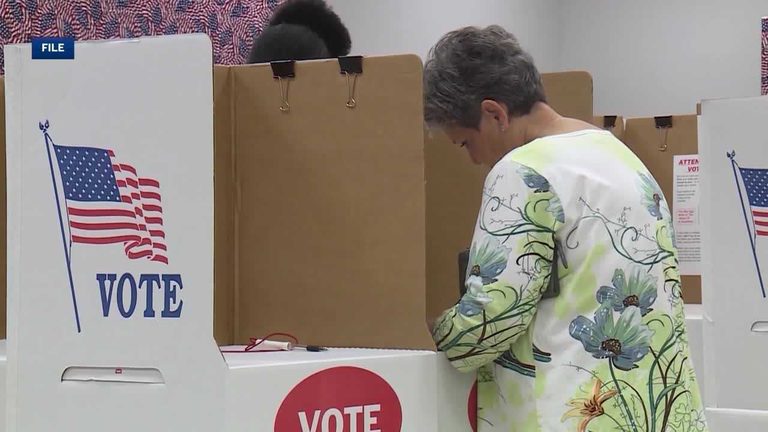
The discussion reflects a broader national conversation about transparency in local elections and the role of political parties in education governance. Oklahoma’s school‑board elections have historically been held on odd‑month dates that see turnout as low as five percent, a figure Mazzei cites as a reason for reform.
What’s next for voters
Voters will see Mazzei, Munson, and three independent candidates on the November ballot. As the campaign heads into its final stretch, the question of whether party affiliation should appear on school‑board ballots will likely influence how parents and community members evaluate candidates.
Regardless of the outcome, the debate underscores the importance of parental involvement in education decisions—a core value for Oklahoma families.
Original reporting: Oklahoma City News Feed (HLL/CB) — read the source article.