Spain’s national political landscape is set for a rapid shift after Prime Minister Pedro Sánchez announced a snap election for November 29. The move follows weeks of street protests over the eviction of an 87‑year‑old resident in Madrid and mounting pressure from opposition parties.
Polling Landscape
Current opinion polls place Sánchez’s Spanish Socialist Workers’ Party (PSOE) at roughly 28 % of the vote, never rising above 33 % during his eight‑year tenure. Parties further left of the Socialists are polling near 8 %, leaving the left‑leaning bloc fragmented.
By contrast, the centre‑right People’s Party (PP) and the far‑right Vox are projected as the only combination capable of securing an absolute majority in the 350‑seat Congress of Deputies. Vox’s support hovers around 18 %, buoyed by younger and male voters.
Key Issues Shaping the Campaign
Housing has become the dominant theme for the left. Sánchez called the election after a high‑profile eviction sparked nationwide demonstrations, positioning affordable housing as a central promise for his campaign.
Immigration will also dominate debate. Sánchez, a vocal proponent of immigration’s economic benefits, recently granted legal status to nearly one million undocumented migrants. Vox, meanwhile, is demanding far tighter border controls after a mass crossing of 72,000 migrants into the enclave of Ceuta in July overwhelmed local authorities.
Corruption allegations continue to dog the incumbent government. Opposition parties plan to highlight investigations, trials and convictions involving members of Sánchez’s inner circle and family. Sánchez has repeatedly denied wrongdoing, describing the probes as politically motivated attacks.
Candidate Profiles
Pedro Sánchez, the incumbent premier since 2018, will run again for the Socialists. He is now Spain’s second‑longest‑serving prime minister since the transition to democracy in 1978. Despite a tenure marred by corruption inquiries, Sánchez hopes the housing crisis and fears of a far‑right government will energize left‑leaning voters.
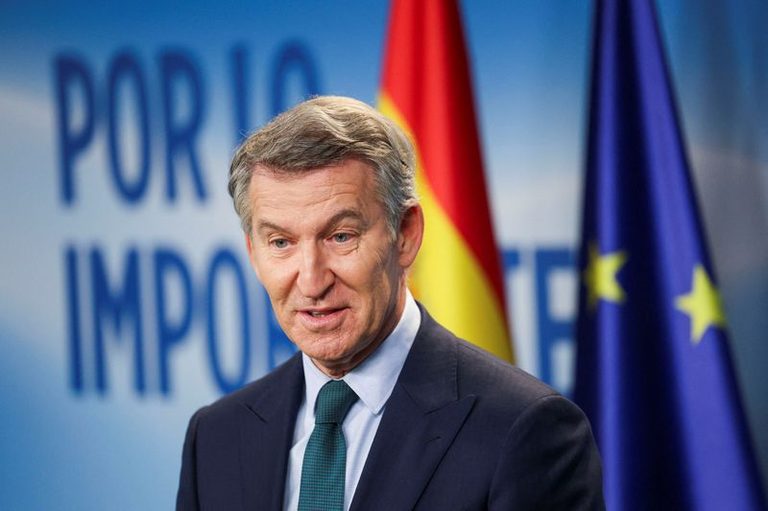
Alberto Núñez Feijóo, former president of the autonomous region of Galicia, leads the People’s Party. He has headed the PP since April 2022 and previously built a reputation as a moderate, pragmatic regional administrator. The PP emerged as the largest party in the 2023 general election but fell short of forming a government, leaving Feijóo as opposition leader.
Vox’s leader Santiago Abascal, a former Basque activist against separatism, has steered the party from a marginal force to Spain’s third‑largest party. Vox advocates stricter immigration controls, recentralisation of state powers, lower taxes and the reversal of many progressive social policies.
Potential Coalition Scenarios
Should the PP secure a plurality, it is expected to rely on Vox for a governing coalition, potentially granting the far‑right a cabinet role for the first time since the death of dictator Francisco Franco in 1975.
On the left, parties to the left of PSOE are preparing a new “Broad Front” alliance, intended to replace the earlier Sumar platform founded by Labour Minister Yolanda Díaz. The Broad Front will name a leadership candidate at an October 17 launch event. Podemos, a former junior coalition partner, has so far declined to join the new front, opting to run independently unless open primaries are held.
Fragmented Parliament and Regional Parties
Spain’s parliament remains highly fragmented, giving small regional parties significant leverage. Four separatist parties—EH Bildu (Basque Country), BNG (Galicia), ERC (Catalonia) and Junts (Catalonia)—hold sway over coalition calculations. While EH Bildu, BNG and ERC have generally supported Sánchez, Junts has repeatedly vetoed his housing reforms, contributing to the decision to call early elections.
As the November vote approaches, Spanish voters face a stark choice between a left‑leaning coalition that promises social protections and a centre‑right alliance that may usher in stricter immigration policies and a return to more traditional fiscal measures.
Original reporting: Appleton, WI News Feed (HLL/CB) — read the source article.