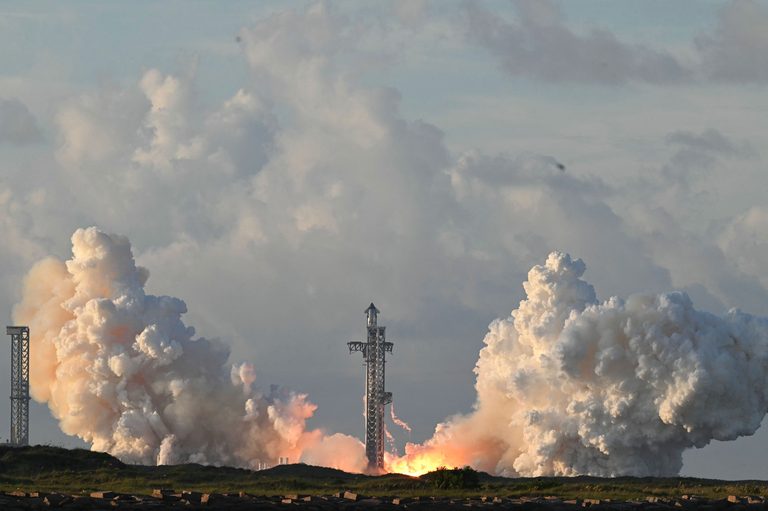
SpaceX achieved a major milestone on Monday when its Starship vehicle lifted off from Starbase in Texas and entered orbit for the first time. The 407‑foot rocket carried 26 of the newest Starlink satellites, adding to the more than 11,000 older units already providing broadband service worldwide.
Mission profile and early success
The launch began at the Texas Gulf Coast, and after a brief engine shutdown on one of the vehicle’s seven Raptor engines, flight controllers decided to continue the ascent. The remaining engines performed as expected, and Starship reached the intended orbital altitude of roughly 170 miles, traveling at about 17,500 mph. Mission Control announced, “Starship is orbital,” to cheers from the crowd gathered at the launch site.
Why the flight was ended early
Although the original plan called for a ten‑hour flight that would have completed six full laps around the planet, controllers elected to bring the vehicle back after only a couple of orbits. No specific technical issue was cited; the decision was framed as a precaution to ensure the safety of people on the ground. The spacecraft re‑entered over the Pacific and splashed down north of Hawaii roughly three hours after liftoff.
Safety considerations
Elon Musk has repeatedly warned that an uncontrolled breakup of Starship over populated areas could quickly erode public support for the program. By ending the flight early, SpaceX avoided the risk of debris falling on land, a move that aligns with the company’s stated commitment to “extremely cautious” operations.
Implications for NASA’s Artemis program
The successful orbital insertion is a key step toward certifying Starship for NASA’s Artemis lunar missions. NASA Administrator Jared Isaacman praised SpaceX for “managing every step in a safe, responsible and especially inspirational way.” Artemis III, slated for next summer, will involve a docking exercise in Earth orbit that includes Starship alongside other commercial landers. Subsequent Artemis missions, including Artemis IV in 2028, could see astronauts landing on the Moon using either Blue Origin’s Blue Moon or SpaceX’s Starship, depending on readiness.
Future launch sites and next steps
SpaceX is expanding its launch infrastructure, with a second Starship site under construction at Kennedy Space Center in Florida and a third planned for Louisiana. The company also plans to reuse the vehicle by catching it with massive mechanical arms on the launch pad, a capability that could allow rapid turnaround and lower launch costs. If the catch system proves successful, SpaceX expects to fly another Starship mission by the end of the year or early next year.
Economic impact for Texas
The Starbase operations have become a significant driver of jobs and investment in the region. Local businesses report increased activity from contractors, hospitality providers, and service firms supporting the launch cadence. State officials have highlighted the program as a showcase of American innovation and a catalyst for future aerospace growth in Texas.
While the mission concluded earlier than originally planned, the achievement marks a decisive step forward for commercial spaceflight and for the United States’ ambition to return humans to the Moon and eventually send them to Mars.
Original reporting: NBC10 Boston — read the source article.