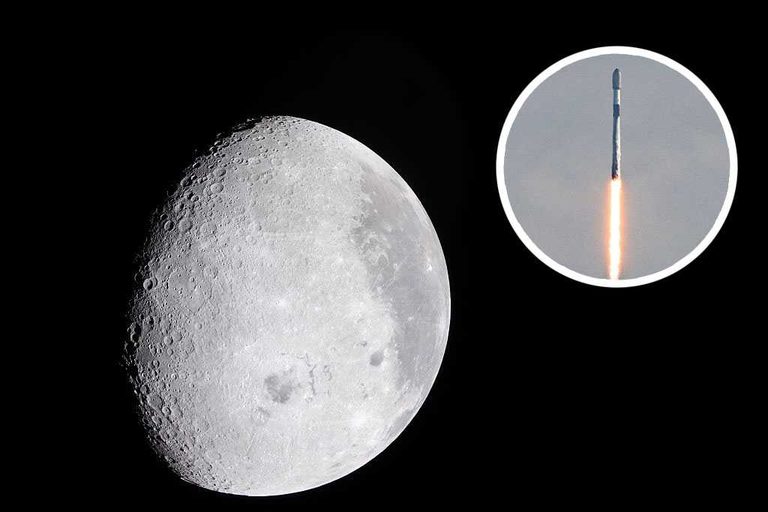
A drifting SpaceX rocket is on a collision course with the moon, slated to slam into the lunar surface this week, packing the equivalent energy of three tons of TNT.
What We Know
The rocket’s upper stage will unintentionally slam into the moon on Wednesday at an estimated speed of 5,400 mph — about seven times the speed of sound. The crash is expected to happen near the moon’s Einstein Crater on its sunlit western limb.
Scientists estimate that the rocket will crash around 2:35 a.m. ET Wednesday. With the action unfolding in the wee hours, the eastern portions of the U.S. and Canada, and much of South America should have the best views — but only if you have the right equipment.
The impact flash, lasting less than a second, will probably be too dim to see, according to experts. But the stream of ejected material could stretch for several miles into space and remain visible to telescopes for tens of minutes.
Why Are Scientists Interested?
With meteoroids and other natural objects offering little if any warning before walloping the moon, scientists said there’s much to learn by observing well-tracked strikes by human-made objects like the one coming up.
NASA hurled rocket sections and lunar modules into the moon during the Apollo era for seismic measurements. Decades later, in 2009, NASA intentionally crashed its LCROSS spacecraft and upper stage in search of ice near the lunar south pole.
Original reporting: WLKY Louisville — read the source article.