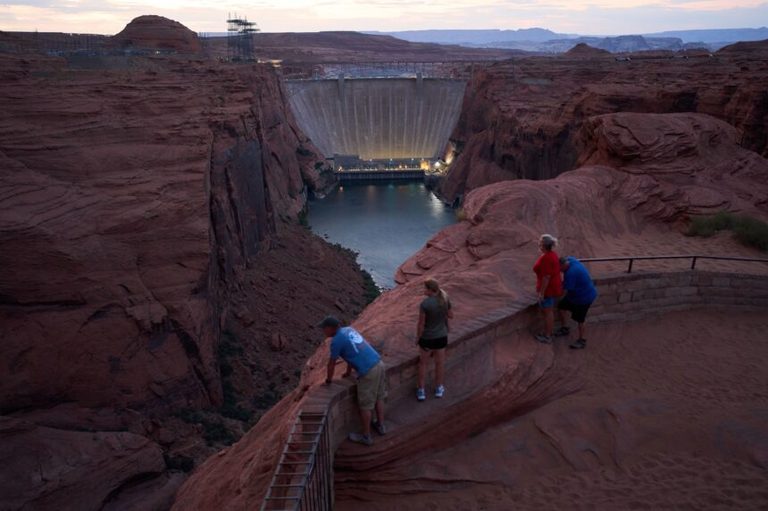
The combined water level in two of the United States’ biggest reservoirs, Lake Powell and Lake Mead, has fallen to a historic low. This significant moment in the Colorado River crisis threatens a water system that supplies tens of millions.
Impact on the Southwest
The Colorado River is the lifeblood of the Southwest, irrigating more than 5 million acres of farmland, generating enough electricity to power around 700,000 homes, and providing water for 40 million people.
The headwaters of this 1,400-mile long artery are in the Rocky Mountains, fed by melting snowpack. The river flows across seven states, filling Lake Powell and Lake Mead as it winds toward the Gulf of California.
Record Lows and Drought
Levels in both lakes have fallen further since the record was first set last week. Lake Powell, currently 23% full, is at its lowest level on record for July, and, based on current rates of decline, could reach its all-time record low sometime next month.
Lake Mead is 27% full and less than a foot from its all-time record low, set in July 2022. The researchers predict Lake Mead and Lake Powell will set a new record low for their combined water storage every day from now until next spring, when the runoff from the winter snowpack starts to replenish water levels.
Consequences and Solutions
The low reservoir levels are a dramatic signal that the system is at risk of crashing, meaning reservoir levels so low that water cannot be delivered from them. Immediate action is needed, including big investments in making farmers’ water use more efficient and ensuring the right crops are grown in the right areas.
Original reporting: KTVZ (Central Oregon) — read the source article.