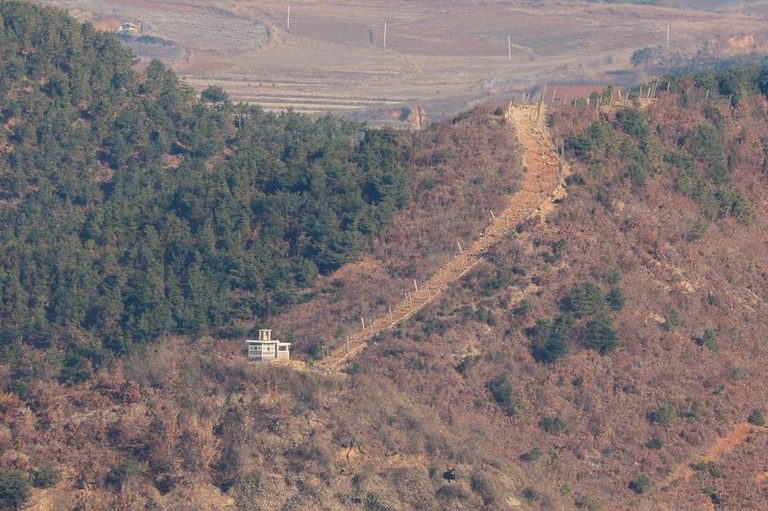
Seoul’s Ministry of National Defense said on Tuesday that the Republic of Korea is preparing a diplomatic response aimed at compelling the Democratic People’s Republic of Korea to issue an apology for a mine blast that injured two South Korean soldiers in the Demilitarized Zone (DMZ). The statement was made by spokesperson Chung Bin‑na, who also urged Pyongyang to sit down for talks on the disputed alignment of the Military Demarcation Line (MDL) that separates the two Koreas.
Details of the September blast
On September 21, a mine detonated in the southern portion of the DMZ, wounding three South Korean troops, two of them seriously. A joint investigation conducted by South Korean forces and the United Nations Command concluded that the explosion was caused by mines planted by North Korea.
Seoul’s demands
Chung said the South Korean government expects North Korea to remove the mines it has placed south of the MDL and to formally acknowledge responsibility for the incident. She also highlighted that differing interpretations of the exact border line continue to fuel tension in the area.
The MDL stretches more than 200 km (about 124 miles) across the Korean Peninsula, marked by roughly 1,900 concrete pillars. Decades of limited access have made some sections difficult to verify, contributing to the ongoing disagreement over the precise location of the line.
North Korea’s response
North Korean state news agency KCNA dismissed Seoul’s accusations as “groundless” and rejected the demand for an apology. Kim Yo‑Jong, the sister of North Korean leader Kim Jong Un, asserted that Pyongyang had not deliberately placed mines in the border zone.
Implications for inter‑Korean relations
The incident underscores the fragile security situation on the peninsula and the importance of clear communication channels between the two governments. South Korean officials hope that a firm diplomatic stance will encourage Pyongyang to engage constructively and reduce the risk of further incidents.
While the South Korean government has not detailed the specific measures it may take, the emphasis on a diplomatic solution reflects a broader strategy of seeking accountability while keeping open the possibility of dialogue.
International context
The DMZ remains one of the world’s most heavily fortified borders, and any escalation can draw attention from regional powers and the United Nations. Maintaining stability in the area is a shared interest for the international community, which continues to monitor developments closely.
Seoul’s call for an apology and for renewed talks on the MDL highlights the ongoing challenges of managing a cease‑fire line that has been in place since the armistice of 1953. The outcome of these diplomatic efforts will be watched closely by both Koreas and their allies.
Original reporting: Appleton, WI News Feed (HLL/CB) — read the source article.