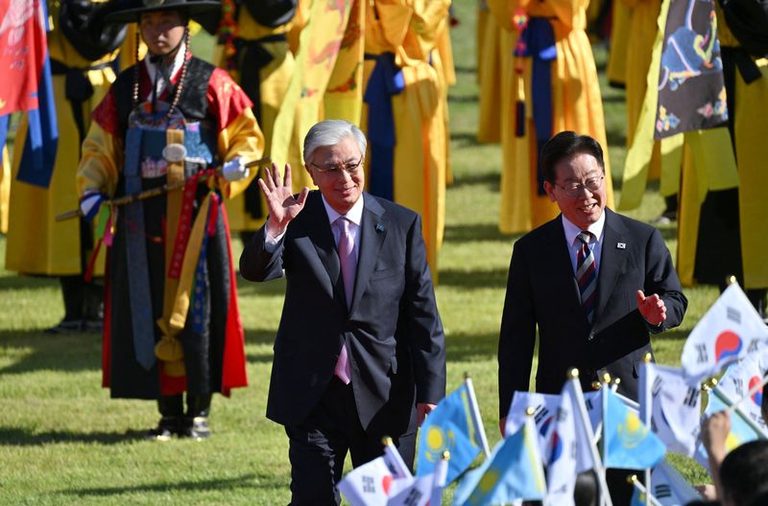
In a move aimed at strengthening strategic ties and securing vital resources, South Korea and Kazakhstan signed a memorandum of understanding (MoU) on the peaceful use of nuclear energy on Tuesday. The agreement was sealed during a high‑level meeting between South Korean President Lee Jae‑Myung and Kazakhstan President Kassym‑Jomart Tokayev, who also discussed cooperation on trade, artificial intelligence, and critical minerals.
Why the partnership matters
Both nations see the deal as a response to the turbulence in the global economy and the growing uncertainty surrounding supply chains for high‑tech materials. President Lee praised Kazakhstan as a “key partner” with “immense potential in future high‑tech industries,” emphasizing the importance of diversifying energy sources and mineral supplies for South Korea’s industrial base.
Beyond nuclear: expanding trade horizons
The MoU is one of 13 documents signed during the visit, which also covered cooperation on crude oil, science and technology, and broader trade initiatives. South Korean Prime Minister Han Seong‑sook highlighted the need to move beyond traditional trade in crude oil and uranium, urging businesses to explore opportunities in lithium and other critical minerals that are essential for batteries, renewable‑energy technologies, and advanced manufacturing.
Kazakhstan, rich in lithium, rare‑earth elements, and other strategic minerals, offers South Korean firms a reliable source of inputs that can help mitigate the volatility of global markets. In turn, South Korea brings cutting‑edge technology and expertise in mineral exploration and processing, creating a mutually beneficial relationship.
Strategic context
Seoul’s outreach aligns with its “New Northern Policy,” launched in 2017 to deepen economic ties with Central Asian and Eurasian partners. The policy reflects South Korea’s broader effort to reduce dependence on traditional energy imports and to secure a stable supply of materials needed for its high‑tech industries.
President Tokayev echoed this sentiment, noting that Kazakhstan’s cooperation with South Korea can accelerate the development of its own high‑tech sectors while providing a stable market for its mineral exports.
Next steps
President Lee will host President Tokayev and leaders from four other Central Asian nations on Wednesday for a multilateral summit focused on expanding cooperation across energy, trade, and technology. The summit is expected to produce additional agreements that will further integrate the region’s economies and enhance security of supply for critical resources.
While specific details of the nuclear cooperation remain undisclosed, officials indicated that the partnership will focus on peaceful applications, including research, training, and the development of advanced nuclear technologies that can support clean‑energy goals.
Implications for the region
The agreement underscores a growing trend of Asian economies seeking strategic partnerships beyond traditional allies to safeguard their industrial futures. By linking nuclear cooperation with critical‑mineral trade and AI collaboration, South Korea and Kazakhstan are positioning themselves at the forefront of a new era of technology‑driven diplomacy.
Analysts suggest that the partnership could serve as a model for other nations looking to balance energy security, economic growth, and technological advancement in an increasingly competitive global landscape.
Original reporting: Appleton, WI News Feed (HLL/CB) — read the source article.