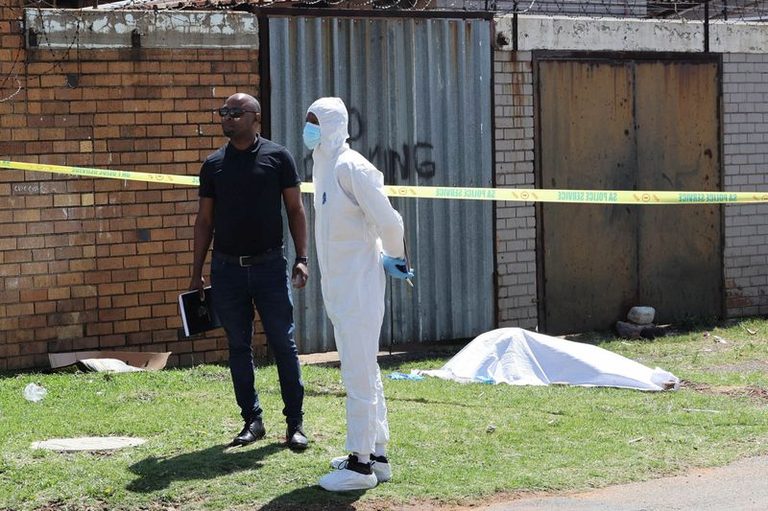
Johannesburg – On Thursday, South African police announced the recovery of a ninth young woman’s body in the Ekurhuleni region east of Johannesburg. The discovery adds to a disturbing pattern of killings that have unfolded over the past two months, each victim appearing to be a woman in her 20s or 30s.
Community alarm grows
Residents of the area are expressing deep anxiety. “I am feeling a lot of fear and paranoia, especially for us with daughters,” said Nomgqibelo Tshabalala, a local who recently used an Uber service. “My daughter caught an Uber yesterday and I did not sleep worried, and when I heard about this incident on the radio this morning I got even more scared.”
Police response
Deputy National Commissioner for Policing Tebello Mosikili told reporters that officers were called early Thursday morning after the body was found. “It’s still very early to make any conclusions about this body,” Mosikili said, emphasizing that investigators are treating the scene as a possible dump site and that the crime may have occurred elsewhere.
While the victim’s age appears consistent with the other cases, officials have not confirmed a definitive link between the incidents. The bodies have often been discovered stripped of clothing and showing signs of sexual violence, underscoring the brutal nature of the attacks.
Government vows action
President Cyril Ramaphosa has publicly pledged that “no stone will be left unturned” in the investigation, reflecting the administration’s stated commitment to confronting gender‑based violence—a long‑standing social problem in South Africa despite numerous government pledges to address it.
Ramaphosa’s promise aligns with broader calls for stronger public‑safety measures and more resources for law‑enforcement agencies tasked with protecting women. Critics have long argued that existing policies have been insufficient, and the recent spate of killings has reignited public outcry over the need for decisive action.
Broader context
Violence against women remains one of the country’s most entrenched challenges. While the government has introduced a range of initiatives—such as the National Strategic Plan on Gender‑Based Violence and Femicide—implementation gaps and limited funding have hampered progress. The current wave of murders has amplified calls from civil‑society groups for stricter enforcement, better victim support services, and community‑based prevention programs.
Law‑enforcement officials say they are expanding forensic resources and increasing patrols in the affected neighborhoods. They also urge the public to report any suspicious activity promptly, emphasizing that community cooperation is essential to breaking the cycle of violence.
What residents can do
Authorities recommend that residents remain vigilant, secure personal safety measures, and stay informed through official channels. Community leaders are organizing neighborhood watch meetings and outreach programs aimed at supporting families affected by the recent tragedies.
As the investigation continues, South Africans await further updates from the police and the president’s office, hoping that the promised thoroughness will lead to accountability and, ultimately, a safer environment for women and families across the nation.
Original reporting: Appleton, WI News Feed (HLL/CB) — read the source article.