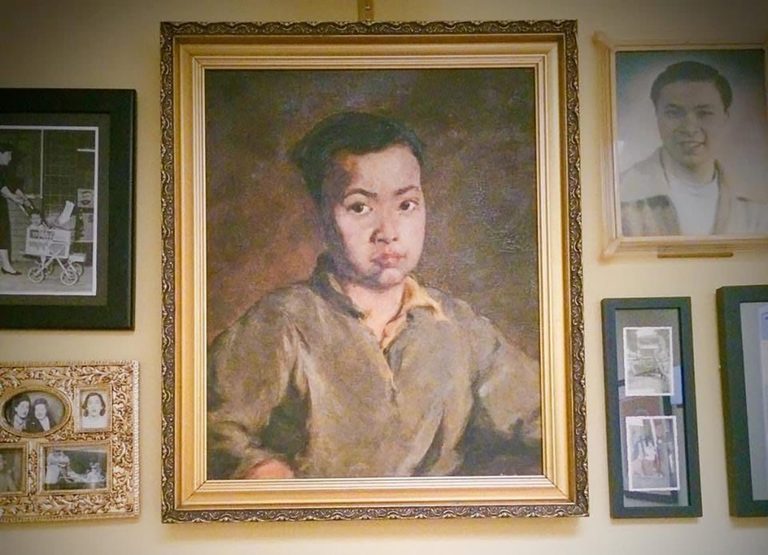
Kelvin Yee, a San Francisco resident, has always been fascinated by the stories his father, Kong Yee, told him about the oil painting ‘China Boy’ that hung in their family’s home. The unsigned and undated portrait depicts a young Chinese boy in rough brushstrokes.
A Family’s History
Kong Yee, Kelvin’s father, said the painting was by a well-known artist whose work hung in museums. He also claimed to be the young boy in the portrait, which was painted when he worked as a houseboy on a wealthy estate in Santa Barbara during the Great Depression.
Kong Yee’s journey to the United States is a story of perseverance and determination. His grandfather had come to California to build the Transcontinental Railroad and pan for gold but was forced to return to China due to the Chinese Exclusion Act. Kong Yee and his father, Wee Ham Yee, later came to the United States from the Guangdong Province when Kong Yee was just nine years old.
Uncovering the Truth
Kelvin Yee began to wonder if his father’s stories were true and set out to uncover the truth behind the painting. With the help of friends, he found the painting online and learned it had hung in the Santa Barbara Museum of Art. The artist, Charles Cabot Daniels, was an award-winning artist who taught at the Santa Barbara Art School.
The museum had acquired the artwork in 1985 as a gift from Mark Piel, but it was sold in 2011. Kelvin Yee also discovered that Daniels had won awards in Los Angeles and Santa Barbara for his artworks, including a prize for ‘Chinese Girl’.
Kelvin Yee’s journey to uncover the truth behind ‘China Boy’ is a testament to the power of art to tell a story and preserve history. As he said, ‘A painting is a way of telling a story. It’s the novel, it’s the history lesson.’
Original reporting: Mission Local — read the source article.