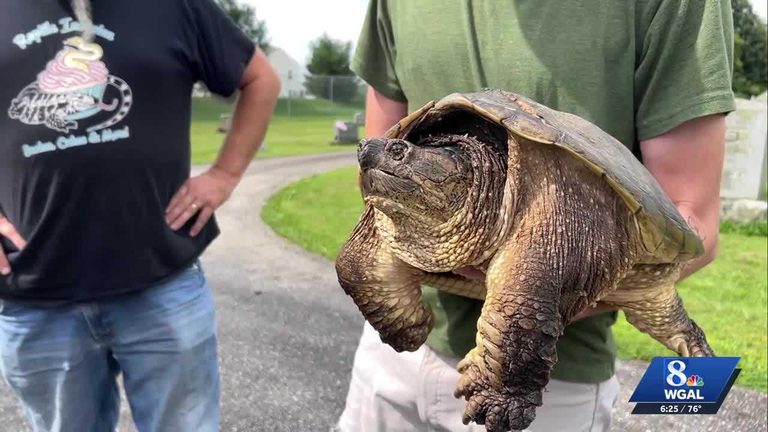
When a family discovered a wounded snapping turtle in the middle of West High Street in New Oxford on July 9, they called local wildlife experts for help. The 20‑pound animal, later named Dino, had been hit by a car and suffered a fractured shell. More troubling, an X‑ray showed two metal hooks lodged in his throat – a possible sign of poaching.
Rescue and surgery
Reptile‑specialist Jamey Swisher of Reptile Invasion arrived quickly and carefully lifted the turtle, noting that Dino was not trying to strike despite his injury. “I knew he was in pretty bad shape,” Swisher said. The turtle was taken to the West Shore Wildlife Center in Dover, where staff, including director Garrett Lamason, began a rigorous rehabilitation plan.
Veterinarians performed a risky operation to extract the hooks. The procedure was delicate, given the turtle’s size and the proximity of the objects to vital structures in his throat. After the surgery, Dino was monitored closely, receiving antibiotics and supportive care to ensure his shell healed and his appetite returned.
Recovery and release
Over the following weeks, Dino’s condition improved dramatically. “He is definitely happy and healing and got his spice back,” Lamason remarked, smiling at the turtle’s renewed vigor. Once the staff were confident that his shell had mended and he could fend for himself, they prepared for his return to the wild.
On September 2, the wildlife team released Dino into the South Branch of Conewago Creek in Adams County. They watched as the turtle slowly made his way into the water, a moment that Swisher described as “fantastic” and “the highlight of my whole year.” Jessica Fishel, also of Reptile Invasion, added, “It’s great he gets to go back to his real home and doesn’t have to live in a shelter.”
Why the story matters
Snapping turtles are long‑lived creatures; they can reach ages of 100 years. Dino, estimated to be about 30, now has many decades ahead if the creek remains a safe habitat. His rescue underscores the importance of community vigilance and the work of local wildlife centers that protect Pennsylvania’s natural heritage.
Residents are encouraged to report injured wildlife promptly and to drive carefully in areas where animals cross roads. The West Shore Wildlife Center continues to rely on volunteers and donations to care for injured animals and to educate the public about Pennsylvania’s diverse ecosystems.
How to help
Those wishing to support the center can volunteer, donate, or spread awareness about safe driving practices near wildlife corridors. By working together, neighbors can ensure that more creatures like Dino receive the care they need and are given a chance to thrive in their natural homes.
Original reporting: WPBF (Treasure Coast / Hearst) — read the source article.