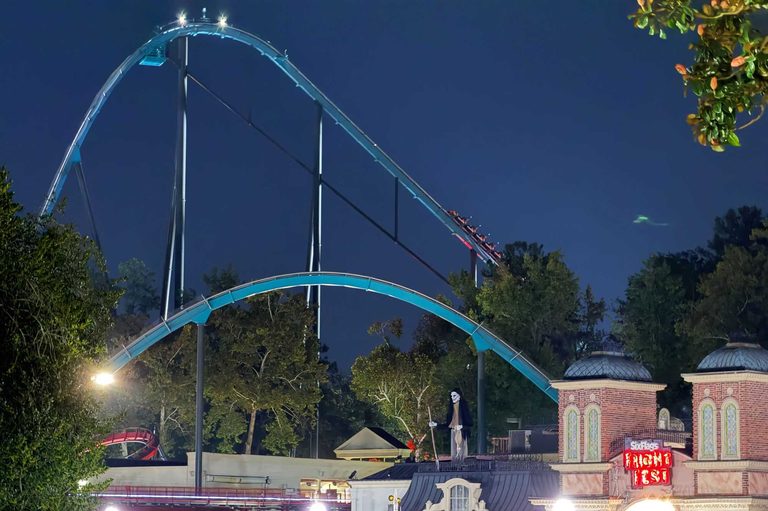
Authorities in Georgia have ordered the immediate closure of the Goliath roller coaster at Six Flags Over Georgia after a tragic accident on Monday that claimed the life of 42‑year‑old Hassan Jihad Ibn Kariem, a school employee from Atlanta. Police and the state’s regulatory agency are investigating how the rider was ejected from his seat and fell to his death.
Local families raise safety concerns
Eyewitnesses described seeing Kariem thrown from the coaster. Several riders who were on the train before him reported that the restraint system felt insecure. Erica Billups, a mother, posted on X that her son and daughter rode Goliath about an hour before the incident and experienced a malfunctioning restraint on one seat. The seat repeatedly unlocked, forcing her son to move to another seat before the train departed with the problem seat empty and the harness up.
Another parent, Summer Bates, who was at the park with her husband and three children, said her older children repeatedly tried to push their restraints down tighter while on the ride. She later understood why they were doing so when she rode the coaster herself and felt the restraints were not secure.
Wider shutdowns across North America
Following the Georgia tragedy, SeaWorld Orlando in Florida and La Ronde in Montreal, Canada, announced temporary closures of rides that use the same restraint design. The total number of roller coasters taken out of service now stands at twelve.
Both La Ronde and SeaWorld Orlando said the specific rides were offline while a thorough safety review is conducted in collaboration with the ride’s manufacturer, Swiss firm Bolliger & Mabillard. The company, which built Goliath in Georgia and eight of the other closed coasters, declined to comment further until it has a better understanding of what transpired.
Technical details of the restraint system
Online photos of the ten closed coasters show a “clamshell” restraint mounted on a vertical bar between the rider’s knees. The bar locks a padded harness over the rider’s lap and upper legs. It is unclear whether these coasters also have seat belts or secondary restraints; Goliath in Georgia does not have backup restraints.
Dennis Speigel, a theme‑park consultant and former president of the International Association of Amusement Parks and Attractions, said the similarity of the restraint systems is “almost certainly why most of the coasters were closed.” He expects the rides will remain shut until investigators determine the cause of the Georgia accident.
Industry perspective on safety
Brian D. Avery, a professor at the University of Florida and amusement‑ride safety expert, explained that manufacturers choose restraints based on speed, force, and track transitions. He advocates for a backup restraint to protect riders, though the industry debates whether such measures would increase wait times.
Six Flags has not yet responded to requests for comment on the restraint issue. The park plans to reopen on Friday, but Goliath is not expected to run.
Legal backdrop
Six Flags faces ongoing legal scrutiny. A class‑action lawsuit filed in 2025 alleges the company concealed poor maintenance conditions before its merger with Cedar Fair. The complaint claims the chain deferred basic park upkeep, cut staffing, and delayed infrastructure repairs. Attorney Timothy Loranger, who represented the family of a 2022 fatality on Six Flags Magic Mountain’s X2 coaster, praised the precautionary shutdowns, calling them a “positive step.”
Six Flags permanently closed the X2 ride last month after a series of injuries.
What’s next for Six Flags Over Georgia?
The Austell‑area park, located about 15 miles northwest of Atlanta, is scheduled to reopen Friday, though the headline attraction Goliath will remain offline pending the outcome of the investigation. Riders and families are urged to stay informed as authorities continue to examine the restraint system and determine any necessary safety improvements.
Original reporting: 40/29 / KHBS (NW Arkansas) — read the source article.