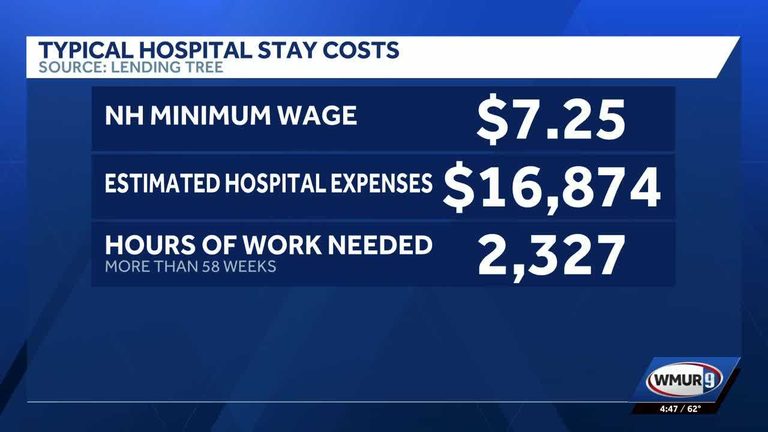
New Hampshire families relying on minimum‑wage jobs are confronting a stark financial reality, according to a recent LendingTree report. The study examined the cost of a typical five‑day hospital stay in every state before insurance and found that in New Hampshire the average bill tops $17,000.
How many hours does it take?
At the federal minimum wage of $7.25 per hour, a worker would need to log 2,327 hours to cover that expense. That translates to roughly 58 standard 40‑hour work weeks – more than a full year of full‑time labor – and that figure does not include any additional costs such as medication, follow‑up visits, or lost wages during recovery.
How New Hampshire compares
New Hampshire ranks fourth among the states where minimum‑wage earners must work the most hours to pay off a hospital stay. Only Idaho, Utah and North Dakota have longer payoff periods. The report highlights a growing gap: while hospital expenses have risen 14.4 % over the past three years, hourly earnings for minimum‑wage workers have increased just 11.2 %.
Implications for families
For parents and caregivers on tight budgets, the numbers underscore the importance of affordable health coverage and policies that protect low‑income workers from catastrophic medical bills. The data also reinforce the need for community‑based assistance programs that can help families bridge the gap between wages and health‑care costs.
What the numbers don’t show
The study focuses solely on the pre‑insurance price of a hospital stay. Many New Hampshire residents obtain coverage through employer plans, Medicaid, or the state’s HealthCost Share program, which can reduce out‑of‑pocket expenses. Nonetheless, the baseline cost remains a sobering benchmark for anyone considering the true price of health care.
Looking ahead
Policymakers at the state level have an opportunity to address this disparity through measures such as expanding Medicaid eligibility, encouraging employer‑provided health benefits, and supporting wage growth initiatives that keep pace with rising medical costs. For families, staying informed about available health‑care resources and financial assistance can make a critical difference when unexpected medical needs arise.
Original reporting: WMUR (Hearst) – local news — read the source article.