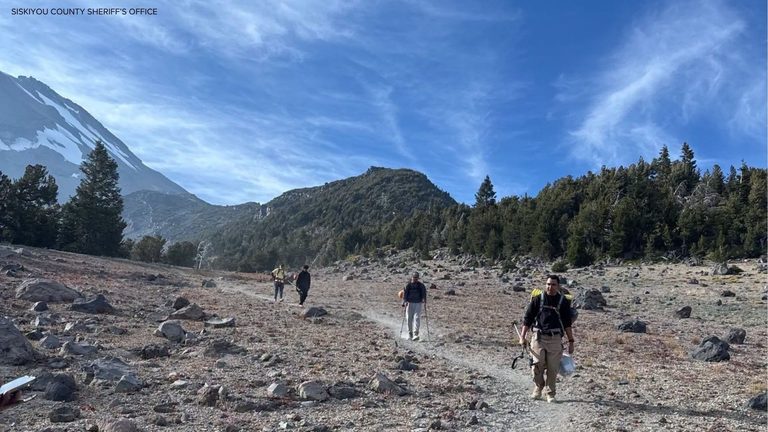
Three hikers from Roseville, California, were rescued on Monday after an ill‑advised reliance on an artificial‑intelligence assistant led them astray on Mount Shasta’s Clear Creek Route. The Siskiyou County Sheriff’s Office said the party used Google’s Gemini AI to plan their ascent, a decision the office called a “critical misstep.”
AI guidance fell short
According to the sheriff’s statement, Gemini advised the group to carry far less food and water than required for an eight‑hour climb that turned into a multi‑day ordeal. The hikers set up camp at 8,400 feet on Saturday and began their summit push at 3 a.m. on Sunday with only daypacks.
They submitted a turn‑around request at 7 p.m., well past the recommended noon deadline, and continued descending in darkness. An hour into the descent, they called dispatch for directions but soon lost the trail, wandering into Mud Creek Canyon.
Injury and bivouac
During the night one member suffered a knee injury, forcing the party to bivouac in the steep drainage of Mud Creek Canyon. The next morning USFS climbing rangers located the hikers, provided medical aid, and escorted them back to the trailhead without further incident.
Sheriff’s office issues safety reminders
The office stressed that even non‑technical routes like Clear Creek require physical fitness, proper preparation, and contingency planning for injuries, weather changes, or unexpected overnight stays. “Serious accidents and fatalities occur on the Clear Creek route when individuals become lost and wander into more dangerous terrain, such as the Mud Creek drainage,” the statement warned.
Key recommendations include:
- Turn around by noon if the summit has not been reached, ensuring daylight for the return.
- Frequently verify you are on the correct route; do not rely solely on cell phones or GPS devices.
- Contact the local USFS Mount Shasta Ranger Station before departure for the most accurate, up‑to‑date information.
- Avoid depending exclusively on AI tools for trip planning; supplement with official sources and local expertise.
While AI can be a helpful research aid, the sheriff’s office emphasized that it should never replace thorough, on‑the‑ground preparation and professional guidance for backcountry adventures.
Local perspective
County officials hope the incident serves as a cautionary tale for the growing number of outdoor enthusiasts turning to digital assistants for wilderness navigation. “We love seeing families and friends enjoy our beautiful mountains,” said Sheriff’s spokesperson Deputy Sheriff Mark Jensen, “but safety must always come first. Proper gear, realistic expectations, and a solid plan are essential, especially when technology can’t replace experience on the trail.”
Original reporting: Allentown News – 6abc Philadelphia — read the source article.