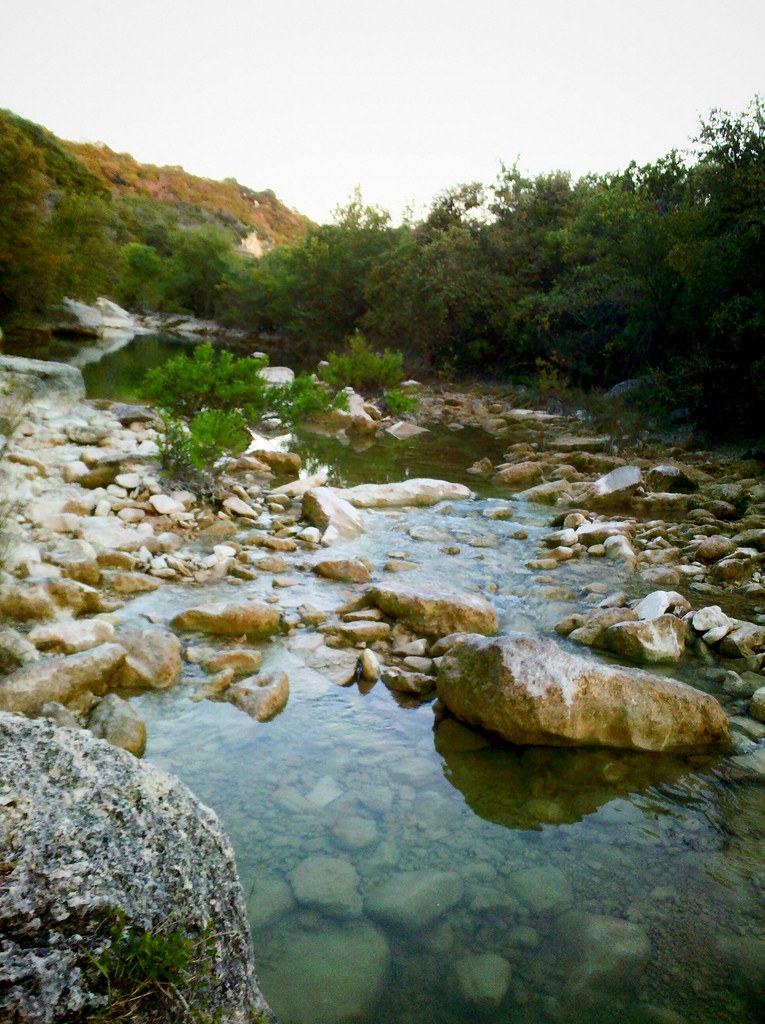
There is a moment, about a mile and a half into the hike along Barton Creek, when the trail opens up and you hear it before you see it — water tumbling over pale limestone shelves into a clear, cool pool ringed by cypress trees and cedar bluffs. That is Twin Falls, and if you have never been, it is one of those Austin experiences that instantly recalibrates your understanding of what this city is capable of offering on an ordinary Tuesday afternoon.
Twin Falls sits within the Barton Creek Greenbelt system, accessible via the Gus Fruh trailhead off Barrell Springs Road in the Barton Hills neighborhood, just southwest of downtown. The hike in is manageable for most fitness levels — mostly flat with a few rocky scrambles — and the payoff is immediate the moment you arrive. Two distinct waterfalls cascade over smooth, striated rock into separate swimming holes, which is where the name comes from. The upper fall is smaller and beloved by kids who use it as a natural water slide. The lower fall drops into a deeper, shadier pool that draws adults who want to float on their backs and stare up at the canopy while the rest of the world dissolves entirely.
What makes Twin Falls special beyond the scenery is its texture — the way the creek bottom shifts from sandy shallows to mossy ledges to bright green algae-draped boulders. You can wade across in spots that barely reach your knees, then turn a corner and find yourself treading water in a pool deep enough to jump into from the surrounding cliffs. Locals know which rocks to climb and which to avoid, and if you watch for a few minutes, someone will always be happy to point you in the right direction. Austin is like that.
The best time to visit is on a weekday morning in late spring or early fall, when the water is still cold enough to feel genuinely refreshing and the crowd thins out considerably. In the height of summer, Twin Falls draws a lively mix of college students, families, and off-duty restaurant workers, all of whom seem to arrive at the collective decision that nothing else matters today. Bring water shoes — the rock crossings can be slippery — plus a dry bag for your phone, and pack a lunch because there is a wide flat limestone shelf above the upper fall that was practically designed for a picnic spread.
There is no admission fee. No wristbands, no concession stand, no gift shop. Just the creek, the trees, the sound of water moving over ancient rock, and the particular kind of contentment that only comes from an afternoon spent completely off the grid in the middle of a major American city. Austin hands you experiences like this and then acts like it is nothing special. It absolutely is.
If you find yourself in Austin between March and October, put Twin Falls on the list before you put anything else on it. It is the kind of place that makes you understand why people move here and never quite manage to leave.