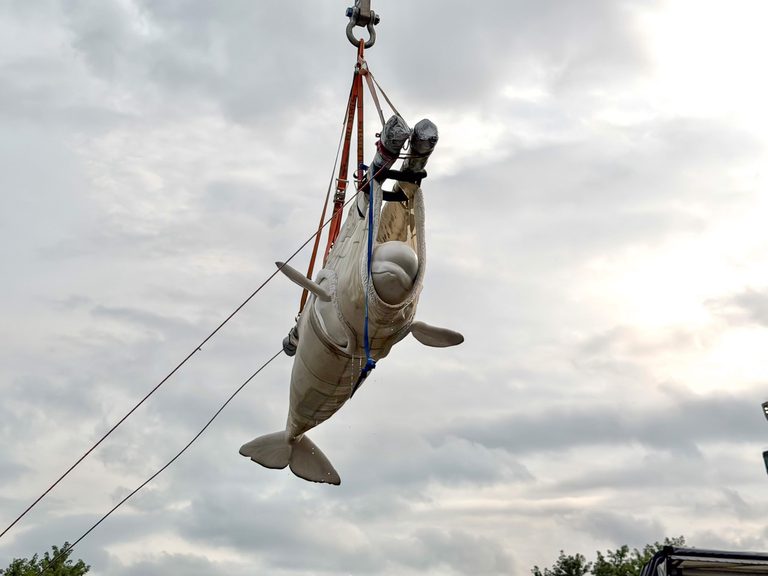
Chicago – The Shedd Aquarium announced Friday that two rescued beluga whales, Peekachu (23) and Rain (20), died from chronic gastrointestinal disease that appears to have begun before they arrived at the aquarium. The findings, released as part of the museum’s ongoing investigation, provide the first medical clues into the deaths of the two whales transferred from Marineland in Ontario earlier this summer.
Medical findings
Necropsy results indicate that both whales suffered significant inflammation of the gastrointestinal tract. In Peekachu the inflammation was deemed “significant,” while in Rain it was classified as “severe.” Pathologists said the type and extent of the inflammation suggest the condition had been present for months, if not years, before the animals entered Shedd’s care.
Examination of the stomach contents revealed foreign material – bird feathers, sticks and porous rocks in Peekachu, and small flecks that may have been paint in Rain. Shedd officials stressed that these items were not believed to be the direct cause of death.
No shared infectious agent
To date, the aquarium has found no evidence of a common infectious disease or environmental factor linking the three recent beluga deaths at Shedd. In addition to Peekachu and Rain, a longtime resident beluga, Beethoven (34), also died this summer, showing age‑related cardiovascular changes. Further analysis is underway to determine any contributing factors.
Shedd’s veterinary team continues to test for fungal, bacterial and viral pathogens. The institution emphasized that the rescued whales were screened for known communicable diseases before their transfer from Marineland.
Broader rescue effort
Shedd received ten belugas from Marineland as part of an international effort to relocate roughly 30 whales from the Canadian facility. So far, four of the rescued animals have died: Peekachu, Rain and Osiris at Shedd, and Jelly Bean at the Oceanogràfic aquarium in Valencia, Spain. Osiris, a 26‑year‑old female, died on Monday; her necropsy is being conducted separately.
The aquarium is closely monitoring the health of its remaining rescued whales, particularly Secord and Caspian, which are currently identified as the most clinically concerning.
Context of Marineland’s conditions
Ontario authorities have previously documented environmental concerns at Marineland, including issues with marine‑mammal life‑support systems and water‑quality standards. Shedd noted that while these records highlight past problems at the source facility, they do not establish a direct link to the gastrointestinal disease found in Peekachu and Rain.
Shedd Aquarium said it will release further findings when additional analysis materially enhances its understanding of the whales’ health or the causes of death.
Community impact
The Shedd Aquarium remains a beloved Chicago institution, drawing millions of visitors each year and serving as an educational resource for families and schools. The museum’s transparent communication about the beluga deaths underscores its commitment to animal welfare and scientific integrity, values that resonate with the city’s families and faith‑based communities.
Original reporting: Block Club Chicago — read the source article.