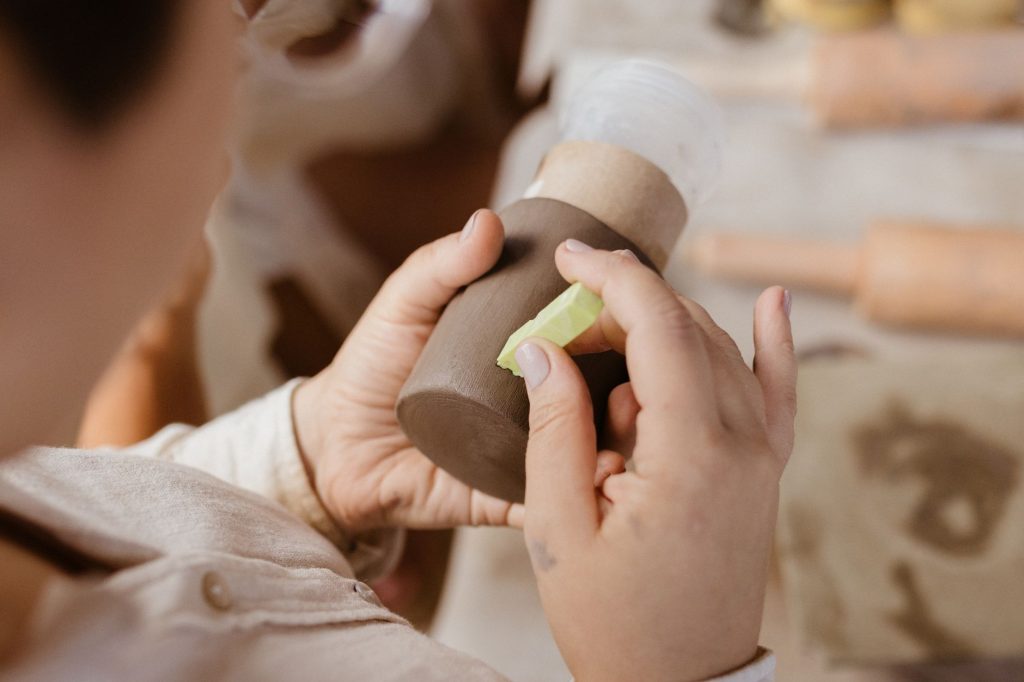
On a Tuesday morning in North Central Charleston, Kristin Dettore is already at the wheel before the first student walks in. Her apron is stiff with dried slip. A ceiling fan turns slowly overhead, and the shelves along the back wall hold maybe sixty pieces in various states of drying — mugs, bowls, small vases with uneven rims that look exactly right. This is Chalked Up Pottery Studio on North Market Street, and it is, essentially, her.
Dettore opened the space several years ago after teaching art in schools and growing frustrated with the constraints of a classroom she didn’t control. She wanted a place where adults and kids could sit down at a wheel or a hand-building table and not feel rushed. The studio runs open studio sessions, drop-in wheel classes, and structured beginner courses — the six-week wheel-throwing series tends to fill up weeks out. Walk-in hand-building classes are easier to land on short notice and cost around thirty dollars, which includes the clay and firing.
What the studio doesn’t feel like is a chain craft experience. There’s no background pop music, no laminated instruction sheets taped to the tables. Dettore or one of her instructors will actually watch what a student is doing and correct it — tell them to slow the wheel, show them how to anchor an elbow, demonstrate the difference between a pinch that opens a form and one that collapses it. The instruction is patient but direct. People come back not because the vibe is particularly curated, but because they actually learn something.
The studio runs afternoon and evening sessions most days, with weekend slots that book fastest. Parents bring their kids on Saturdays. Date nights happen here more often than the owners probably anticipated — there’s something about the messiness of it, the way both people are equally bad at the same task, that apparently loosens people up. Dettore has said she never really marketed it that way; it just became a thing.
Finished pieces get bisque-fired and then glaze-fired in the studio’s kilns. Students pick glazes from a color board during their session, and pieces are ready for pickup usually within two to three weeks. The turnaround is standard for a working studio, not a rushed commercial operation, and Dettore is clear about that timeline up front. If a mug cracks in the kiln, she’ll tell you, and she won’t charge you for it.
The neighborhood is worth noting. North Central isn’t the peninsula’s tourist corridor — it’s more residential, less polished, the kind of block where a pottery studio fits without looking like a destination retail play. Parking on the street is generally fine. There’s a small waiting area with a bench and a few pieces for sale, most of them made by Dettore or studio instructors, priced between fifteen and sixty-five dollars. The functional stuff — the mugs, the small bowls — tends to sell first.
For anyone who tried ceramics once in college and has been vaguely wanting to return to it for years, Chalked Up is the specific kind of place that makes that return easy. Not precious, not intimidating. Dettore runs it with the matter-of-fact steadiness of someone who has found exactly the work she wanted to do and is just going to keep doing it.