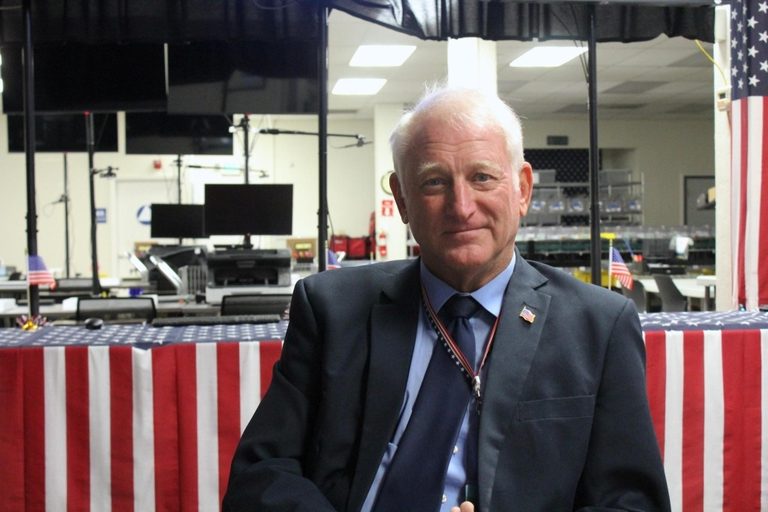
Shasta County elections administrator Clint Curtis confirmed that a federal grand jury subpoena arrived this week, requiring him to appear in Sacramento later this month. Curtis said he is prepared to cooperate fully, offering any information the grand jury may request about what he described as “counterfeit ballots” from the June primary.
Ballot transport concerns
Under the subpoena, Curtis was instructed to bring tens of thousands of voted ballots to the federal court. He explained that the sheer volume – potentially 50 to 100 boxes – makes personal transport impractical. Curtis suggested renting a U‑Haul or asking the California Secretary of State’s Office, or even federal law‑enforcement agencies, to move the boxes.
“Please come get it, lock it away, do what you’re supposed to do with it. Don’t make me drag 100 boxes down, load a truck and drive it to Sacramento. That just seems excessive,” Curtis said.
Legal backdrop
California law passed earlier this year bars elections officials from handing voted ballots to anyone other than the local registrar. An April memo from the Secretary of State’s Office, provided by Shasta County Deputy CEO Stewart Buettell, reiterates a longer‑standing requirement that ballots remain “unopened and unaltered” after counting.
Shasta County has not commented on Curtis’s transport plan. When asked if he had consulted county counsel, Curtis said he gave the subpoena to Joseph Larmour, describing Larmour as “a horrible attorney.”
Expert analysis
Chad Dunn, legal director of the UCLA Voting Rights Project, noted that the subpoena does not necessarily force Curtis to relinquish custody of the ballots. “As long as the materials aren’t disturbed, and the chain of custody and other protections are in place, the grand jury being able to inspect these records as part of their questioning of the elections administrator seems to be within the bounds of the law,” Dunn said.
However, Dunn warned that federal law‑enforcement should not take exclusive custody of the ballots. “They have to be handled by the local election official,” he emphasized.
Constitutional law scholar Justin Levitt of Loyola Law School, who has written about similar ballot‑seizure cases, explained that the law is designed to keep election records in one identifiable location. “Government officials with legitimate needs can inspect the records and take copies, but nobody other than the registrar gets exclusive custody,” Levitt wrote for Lawfare.
Public reaction
Dunn said the public should be “concerned but cautious.” He added that if federal agents inspect the ballots while they remain under the custody of the elections official, the process is proper. “If they are removing the ballots from the elections office or breaking the chain of custody, that’s something about which the public should be deeply disturbed,” he warned.
Curtis also said he has attempted to arrange a one‑on‑one meeting with President Donald Trump to discuss his concerns, though no meeting has yet been scheduled.
Next steps
The grand jury will meet with Curtis later this month in Sacramento. The outcome of that hearing could clarify how the ballots will be examined and whether any additional legal action will follow.
Original reporting: Shasta Scout (Redding) — read the source article.