Senate Republicans announced they will remain in Washington through next week, a strategic move designed to keep the Senate in session and press forward a bipartisan‑backed affordability measure targeting data‑center electricity costs. The decision comes as several GOP senators, including vulnerable candidates, head into a high‑stakes midterm campaign season.
Why the extra week matters
Earlier this month the House passed the Ratepayer Protection Act by a 417‑3 vote, compelling tech companies that operate data centers to cover any utility bill increases they cause. Republicans fear that an early adjournment would leave the Senate without a chance to align with the House on the measure, potentially handing Democrats a political advantage in upcoming races.
Senate Majority Leader John Thune (R‑SD) told colleagues at the weekly Senate luncheon, “Odds are we plan on being here next week.” An aide likened the Senate’s schedule to a cat chasing a laser pointer—always moving, never quite catching up—underscoring the urgency Republicans feel.
Policy details and partisan stakes
The bill would require public utility regulators to consider a standard that prevents ratepayers from subsidizing the operating costs of data centers. While the legislation does not mandate a specific payment amount, it creates a framework that forces tech firms to shoulder the financial burden of any increased electricity demand they generate.
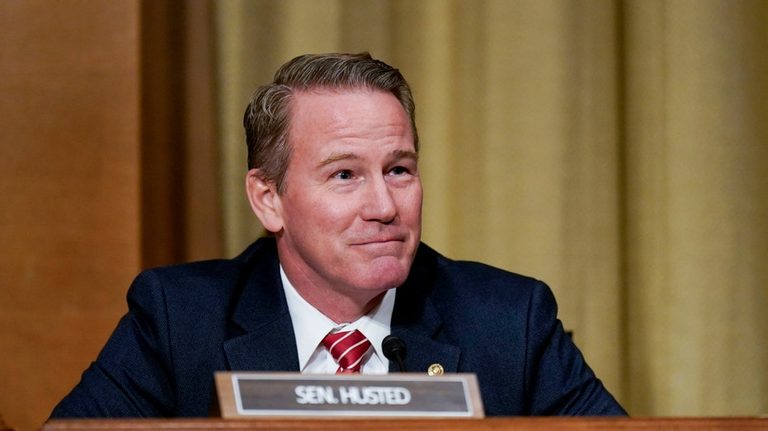
Republican Sen. Jon Husted (R‑OH), who faces a competitive race against former Sen. Sherrod Brown, has been a vocal supporter of the measure. Husted argued on the Senate floor that the bill would give Ohio voters a concrete example of Republican action on affordability. However, Democratic Sen. Martin Heinrich (D‑NM) objected, halting an immediate vote.
Democratic leaders, including Senate Minority Leader Chuck Schumer (D‑NY), framed the bill as a “fraud” that would be voluntary for companies, contrasting it with the mandatory language of the House version. Schumer’s criticism was interpreted by Republicans as a political maneuver aimed at protecting vulnerable GOP incumbents.
Republican response and upcoming vote
Republicans seized the moment to turn the affordability issue into a campaign wedge. Sen. John Kennedy (R‑LA) warned data‑center operators that “people are not going to pay for it,” while Sen. Josh Hawley (R‑MO) warned Missourians that unchecked data‑center expansion could threaten farm land and drive up electricity costs.
Thune is set to schedule a test vote on Wednesday that will require a 60‑vote threshold to advance the bill. If Democrats block the measure, the Senate could adjourn early, leaving Republicans to return home for campaign duties. Conversely, a bipartisan breakthrough could provide a tangible legislative win for GOP candidates ahead of the November ballot.
Implications for the midterms
The timing of the vote underscores how closely policy and politics are intertwined in this election cycle. Republicans view the data‑center bill as a way to demonstrate concrete action on cost‑of‑living concerns, while Democrats argue the legislation falls short of broader affordability reforms.
Both parties recognize that the outcome will be used in campaign messaging. A successful passage could bolster the record of vulnerable GOP senators like Husted, while a defeat may be portrayed by Democrats as a missed opportunity to protect consumers.
As the Senate deliberates, the nation watches a micro‑cosm of the larger midterm battle: Republicans on the offensive, seeking legislative victories to energize their base, and Democrats on the defensive, scrutinizing the substance of GOP proposals.
Original reporting: Fox News (HLL/CB) — read the source article.