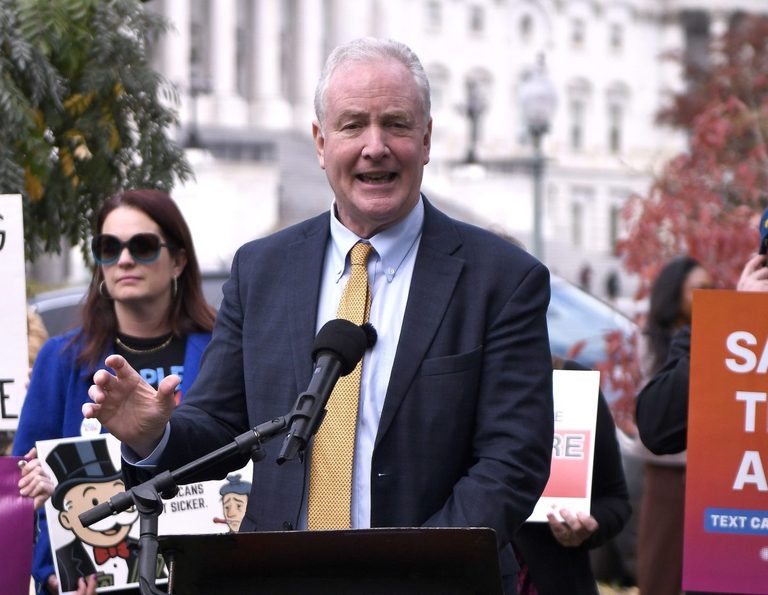
Sen. Chris Van Hollen (D‑MD) unveiled the Ready to Work Act of 2026, a federal proposal aimed at creating paid, temporary jobs for Americans who have been out of work for at least 27 weeks. The legislation would channel Department of Labor funds through local workforce development boards and community organizations, allowing them to partner with employers—including government agencies, nonprofits, and private businesses—to hire long‑term unemployed workers.
Program structure and eligibility
To qualify, participants must be at least 18 years old, legally authorized to work, and actively seeking employment for at least four weeks. The program would pay wages and benefits, with the federal government reimbursing a portion of employer costs. Employers would contribute a share that varies with local unemployment rates—33 % in areas with unemployment at 5 % or less, decreasing as unemployment rises, potentially reaching zero in high‑unemployment regions.
The bill sets a wage floor of $15.87 per hour for 2026, ensuring participants earn at least the applicable minimum wage and enough to keep a family of four above the federal poverty line. Employers must also provide benefits and advancement opportunities comparable to those offered to similarly situated employees.
Duration and safeguards
Federal reimbursement for wages could last up to 12 months, extending to 24 months for positions that lead to a recognized credential. The legislation includes safeguards to prevent employers from using subsidized workers to replace existing staff, cut hours, or undermine striking employees. Participants may not exceed 10 % of a company’s workforce, and no employer may fill more than 100 program positions.
Addressing AI‑related job loss
Recognizing concerns about artificial intelligence, the bill requires participants to report recent employment details, reasons for job loss, and any AI tools used in their prior roles or job search. This data would help the Labor Department track AI’s impact on hiring and workforce dynamics.
Supporters cite a recent poll indicating that 70 % of Americans surveyed in March believe AI is likely to reduce job opportunities, up from 56 % in April 2025. While the bill does not attribute individual unemployment to AI, it seeks to gather information to better understand the technology’s role.
Legislative backing and community support
Senators Ron Wyden (D‑OR), Jeff Merkley (D‑OR), Richard Blumenthal (D‑CT), and Chris Murphy (D‑CT) co‑sponsored the measure. Murphy emphasized the “looming threat of massive job losses from AI” and the need for “good‑paying, stable jobs.”
Workforce and community groups—including the National Urban League, Service Employees International Union, National Association of Workforce Boards, Center for Employment Opportunities, and Employ Prince George’s—have voiced support, arguing that the market alone cannot address long‑term unemployment.
Funding and implementation
The main jobs program would receive mandatory federal funding beginning fiscal 2026, with appropriations set at “such sums as may be necessary.” Additional competitive grants for high‑poverty and chronically low‑employment areas would be funded starting fiscal 2027, allowing local programs to extend subsidies, expand training, or increase employer contributions where needed.
Economist Mark Paul of Rutgers University described the initiative as a “step in where the market has failed,” noting that prolonged unemployment harms families and erodes community stability.
Original reporting: The Washington Informer — read the source article.