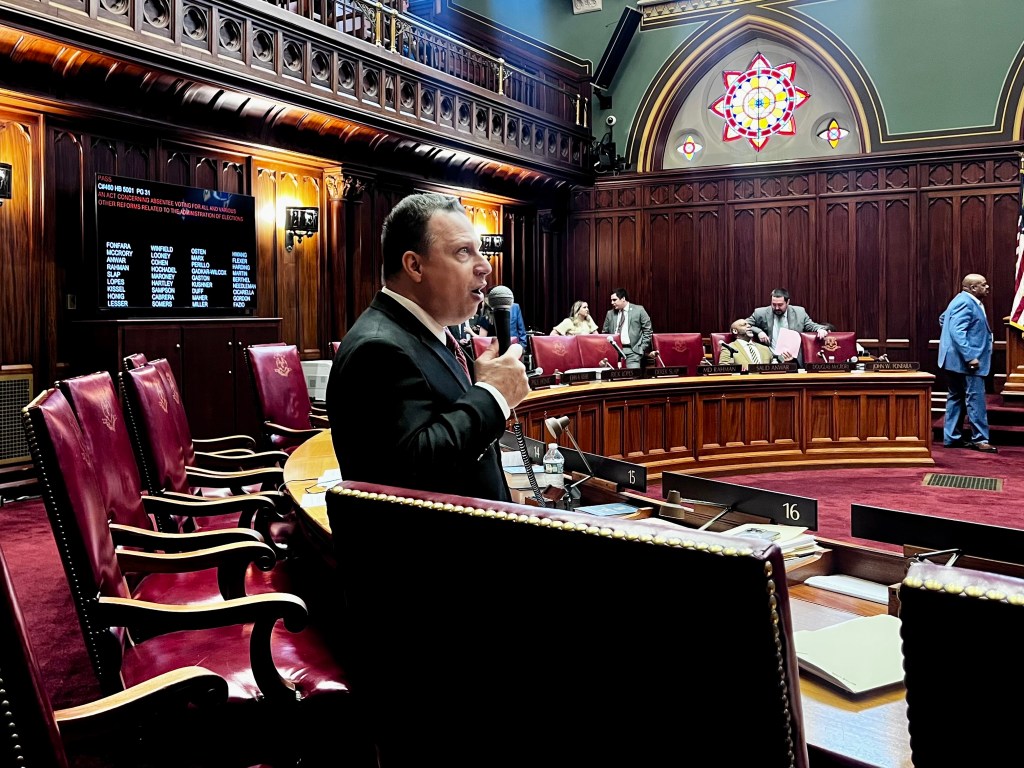
In the recent Connecticut legislative session, Sen. Rob Sampson, R-Wolcott, emerged as a prominent figure, speaking for a total of 14 hours and 41 minutes. This accounted for approximately 18% of the total debate time, according to an analysis by CT Mirror. Sampson’s lengthy speeches have drawn both criticism and praise, reflecting the ongoing debate over the role of extended discussions in the legislative process.
Debate as a Legislative Tool
Sampson, known for his detailed and prolonged debate style, often presents amendments and engages in extensive discussions. His approach has been seen by some as a deliberate tactic to stall legislation, while others view it as a crucial part of the democratic process. Senate Democrats, including Senate Majority Leader Bob Duff, D-Norwalk, have expressed frustration with what they perceive as obstructive tactics. However, Sampson and his supporters argue that thorough debate is essential for representing constituents’ interests and ensuring transparency.
Impact on Legislation
Throughout the session, Senate Republicans, including Sampson, spoke more frequently than their Democratic counterparts, accounting for 57% of the total speaking time. This dynamic has led to tensions, with some Democrats arguing that it hinders the passage of important bills. For instance, Lori Brown, executive director of the Connecticut League of Conservation Voters, expressed disappointment over the failure to pass certain environmental bills, attributing it to extended debates.
Balancing Debate and Efficiency
Senate Republicans, including Minority Leader Stephen Harding, R-Brookfield, contend that the majority party’s control over the legislative calendar should allow for better management of debate time. They argue that starting sessions earlier could accommodate more thorough discussions without extending into late hours. Sampson has also highlighted the need for adequate time to review legislation, criticizing the practice of introducing amendments shortly before votes.
As the session concluded, discussions continued late into the night, with debates over significant bills such as an omnibus transportation bill and a contentious gun bill. Despite the challenges, both parties recognize the importance of debate in shaping legislation, even as they navigate the complexities of legislative procedures.
Original reporting: The Connecticut Mirror — read the source article.


