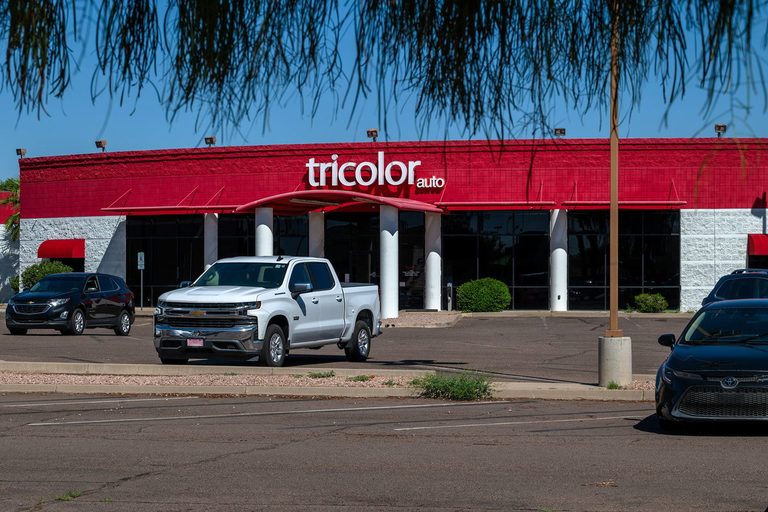
The U.S. Securities and Exchange Commission announced Tuesday that former executives of Tricolor, a Texas‑based subprime auto lender, engaged in a multi‑year fraud that helped fuel the company’s $1.9 billion collapse last year. The SEC’s complaint, filed in the Southern District of New York, alleges that the executives raised nearly $2 billion from investors while knowingly hiding severe liquidity problems.
Misleading investors and bogus collateral
According to the SEC, former chief executive Daniel Chu and other senior leaders portrayed Tricolor as financially sound even as the firm struggled to fund its operations. The agency claims the defendants defrauded investors by using “bogus collateral” and by double‑pledging the same assets to multiple lenders, a practice that inflated the company’s apparent creditworthiness.
Criminal indictment follows
Two months after Tricolor filed for bankruptcy in September 2025, the U.S. Attorney for the Southern District of New York unsealed an indictment that echoed the SEC’s allegations. The indictment states that Chu and other executives repeatedly defrauded lenders, directing a fellow executive, Jerome Kollar, to pay Chu a $6.25 million bonus as the business collapsed. Prosecutors say Chu used part of that money to purchase a multimillion‑dollar property in Beverly Hills, California.
Kollar later pleaded guilty to the fraud charges and agreed to cooperate with investigators.
Impact on employees and lenders
In the weeks following the indictment, Tricolor placed more than 1,000 employees on unpaid leaves of absence before filing for bankruptcy. The fallout also reached major financial institutions. JPMorgan Chase disclosed a $170 million loss tied to its dealings with Tricolor, and its chief executive Jamie Dimon warned analysts that the lender’s failure could signal broader risks in the auto‑loan market.
SEC seeks restitution and penalties
The SEC’s complaint seeks to force Chu and other former executives to repay the ill‑gotten profits, plus interest, and to impose additional civil penalties. The agency emphasizes that the case underscores the need for integrity in private credit markets and aims to protect investors from similar schemes.
While the legal actions are federal in nature, the case has particular relevance for Texas businesses and the state’s auto‑finance sector, which has long relied on subprime lending to serve customers without Social Security numbers or traditional credit histories.
What’s next?
The SEC and the Department of Justice will continue to pursue the case, and additional civil or criminal actions could follow as investigators review the full scope of the alleged misconduct. Stakeholders in the auto‑finance industry are watching closely for any regulatory changes that may arise from the proceedings.
Original reporting: KEYT (Ventura/Santa Barbara) — read the source article.