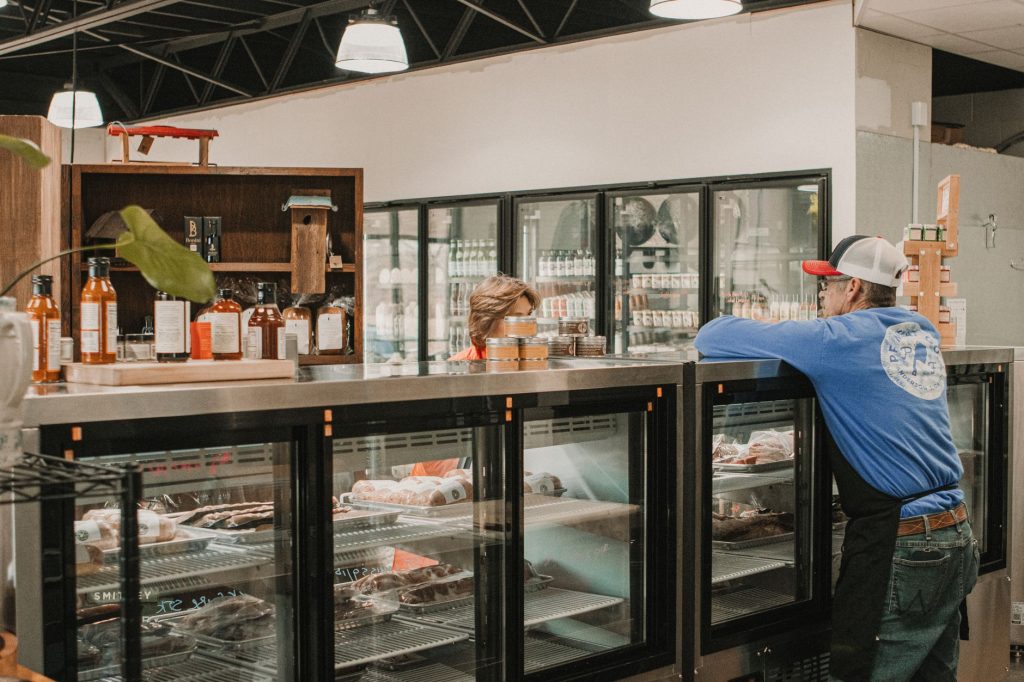
Go on a Saturday in October, when the light is still thin at nine in the morning and the temperature hasn’t decided what it wants to be. Walk into the Missoula Community Food Co-op on Brooks Street and you’ll feel the shift immediately — warm air, the smell of ground coffee and bulk spices, and the low hum of people who are actually paying attention to what they eat. Not performing it. Just doing it.
The Co-op has been around since 1972, which makes it one of the older cooperatives in the Mountain West. It moved to its current South Side location years ago and expanded since, though it still doesn’t feel like a grocery store in any chain-adjacent sense. The layout is dense and deliberate: bulk bins run along one wall, the produce section leans heavily local in summer and fall, and the deli counter in back handles a lunch rush that starts earlier than you’d expect. By ten on a weekend, there’s usually a line.
That deli is worth the wait. The hot bar rotates but tends to hit things like roasted root vegetables, curried lentils, grain salads, and whatever protein the kitchen is running that week. Portions are sold by weight, which means you can build a plate for around eight to ten dollars without much effort, or spend fifteen if you’re genuinely hungry. The soups are reliable — not inspired, exactly, but made with actual stock and actual salt, which puts them ahead of most options in that price range. The prepared sandwiches in the grab-and-go case are solid if you’re moving fast.
Beyond the deli, the store stocks the kind of inventory that used to require three separate stops. Local eggs from farms you can actually name if you read the label. Good cheese, a modest but curated selection of natural wines, bulk nuts and flours and spices priced more fairly than most co-ops manage. The supplement aisle is enormous if that matters to you, and the body care section stocks brands you won’t find at Walmart or Target. There’s a small but decent selection of prepared foods to take home — pasta sauces, dips, broths — most of them made without the ingredient list you need a chemistry degree to parse.
Membership costs around ninety dollars a year and gets you a small discount on purchases, plus a vote in how the place is run. It’s not mandatory, and non-members shop here regularly. But if you live in Missoula and eat food, the math tends to work out in a year’s worth of grocery runs.
What the Co-op does well — and what keeps people coming back past the convenience of bigger stores — is the sense that the inventory was chosen by people who cook. Not a buyer optimizing shelf turns, but someone who actually wanted good miso and spent time finding it. You feel that in the bulk section especially, where the variety is specific in a way that suggests genuine curation rather than default ordering.
On a rainy Tuesday it’s quiet enough that you can take your time, read labels, ask the staff questions they usually know the answer to. On a Saturday morning it’s busy enough to remind you that a lot of Missoula treats this place as infrastructure. Which, for a grocery store that’s been worker- and community-owned for over fifty years, is probably the right word.