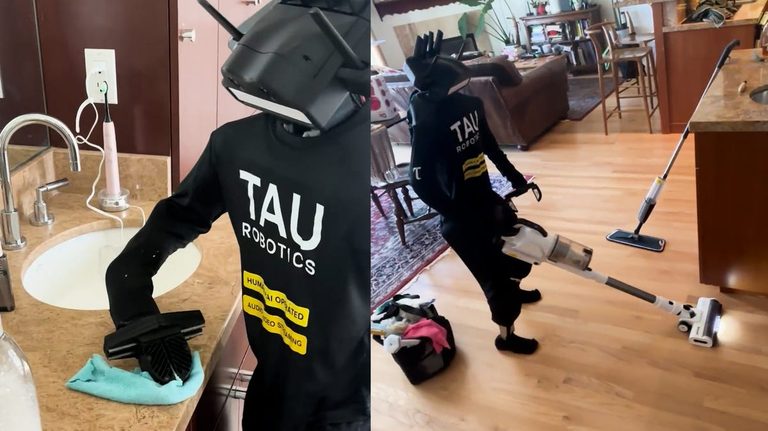
San Francisco – On August 21, Gianna Capezio paid $30 for an hour of service from a humanoid cleaning robot offered by San Francisco‑based Tau Robotics. The robot, operated remotely by a teleoperator, completed three tasks: making the bed, cleaning the bathroom and vacuuming the living area.
How the service worked
Capezio booked the robot online and scheduled a one‑hour slot. While the machine performed the physical work, a human controller guided its movements from a distance, meaning the robot was not fully autonomous. Capezio noted the robot worked more slowly than a human would, but she said it did a “solid job” and she did not need to redo any of the work afterward.
Public reaction
After posting a short video of the robot at work to TikTok, the clip amassed roughly 4.5 million views in three days. Viewers were split: many praised the novelty of a high‑tech cleaning solution, while others criticized the decision to hire a robot over a human cleaner, questioning the speed and thoroughness of the service. Comments such as “How long did it take? Looks like he was in slow mode” and “I just know nothing got cleaned” reflected the skepticism.
About Tau Robotics
Tau Robotics, headquartered in San Francisco, markets humanoid robots for residential and office cleaning. According to the company’s website, its robots can vacuum floors, take out trash and clear clutter. The firm currently offers three models: Chelsea for standard house chores, and Elon and Tony for recurring visits and deep‑cleaning projects. All models are rented at $30 per hour, with bookings made online either as early‑member reservations or via a waitlist for future dates.
Industry context
Tau Robotics is not alone in the emerging robot‑cleaning market. Competitor 1X introduced its Neo robot in October 2025, pricing the unit at $20,000 with a $499‑per‑month subscription option. Neo is marketed as both a housekeeper and companion, capable of tasks such as taking out trash, watering plants and even dancing in promotional videos. While Neo’s ultimate goal is full autonomy, it also relies on remote operation for now. Pre‑orders began in 2025, with deliveries slated for 2026, though the company has not confirmed the exact timeline.
Implications for local households
The rise of rentable humanoid cleaners offers San Francisco residents a new, technology‑driven alternative to traditional cleaning services. For families and individuals seeking flexible, on‑demand help, the hourly pricing model may be attractive, especially for short‑term needs. However, the mixed public response highlights ongoing concerns about cost‑effectiveness, speed and the broader impact on human cleaning jobs.
Looking ahead
As robot‑assisted services expand, local policymakers may need to consider how these technologies intersect with labor standards and consumer protection. For now, San Francisco homeowners can experiment with the novelty of a teleoperated cleaning robot, while the market continues to evolve toward greater autonomy.
Original reporting: Las Cruces Sun News (HLL/CB) — read the source article.