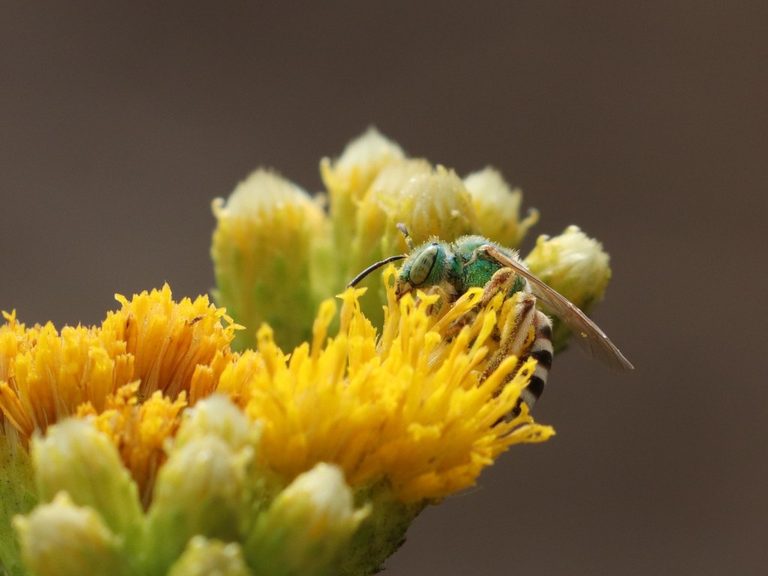
San Diego County residents are hearing a new call to protect the region’s native pollinators. While honeybees—originally brought from Europe in the 1600s—are valued for agricultural pollination, researchers say they can outcompete the 700 native bee species that call the county home.
Honeybees versus native bees
Honeybees live in colonies of ten thousand or more and are routinely shipped to farms across the state, from the Imperial Valley to the Central Valley, to pollinate crops such as almonds and alfalfa. In wild areas, however, their large numbers allow them to harvest most of the pollen from a flower, leaving less for solitary native bees that time their life cycles to specific blossoms.
“California Native Bee Society’s position is to uplift native bees, not necessarily put down honeybees,” said Jess Mullins, president of the society and a Ph.D. in ecology. Mullins explained that native bees often work alone, nesting in the ground or in plant material, and many depend on a single plant species for food.
State bee vote
To raise awareness, the society has launched a public vote that runs through September 8, offering 19 native species as options for California’s official state bee. Among the candidates is the California Fairy Bee, a tiny insect the size of a pencil eraser that relies exclusively on the Mariposa Lily for nourishment. Another contender, the silver‑tailed petal‑cutter bee, fashions circular petal pieces to line its underground nest.
“If you’re lucky enough to have a yard, plant native plants and leave some soil bare so they can build nests,” Mullins advised, encouraging homeowners to create simple habitats for these beneficial insects.
Impact of climate and development
Long‑term data collected by Mullins suggest that native bees in protected wildlands are adjusting to drought by remaining dormant longer, a positive sign. In contrast, those living in fragmented, urbanized neighborhoods are struggling to survive alongside the prolific honey‑making colonies.
The society’s effort underscores a broader conversation about how human activity—both agricultural practices and suburban development—affects the delicate balance of pollinators that support food production and biodiversity.
What residents can do
Beyond voting for a native bee, locals can help by planting native flowering plants, reducing pesticide use, and preserving patches of bare soil for nesting. These steps support not only the bees themselves but also the health of gardens, farms, and natural ecosystems throughout San Diego County.
While the push for a native state bee does not diminish the importance of honeybees to agriculture, it highlights the need for a balanced approach that safeguards the diverse array of pollinators that have long thrived in California’s unique habitats.
Original reporting: Voice of San Diego — read the source article.