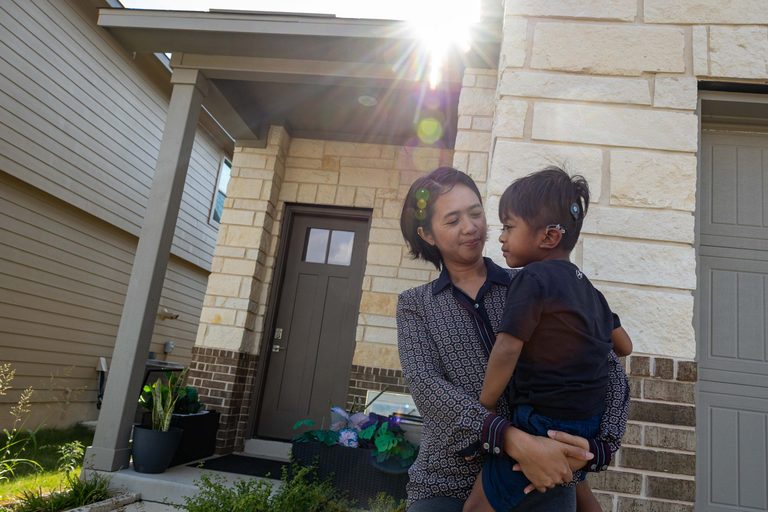
When the Texas Comptroller’s office notified San Antonio parent Naomi Panaligan that her 5‑year‑old son Xeon qualified for a $15,900 Education Freedom Account (TEFA) award, she hoped the voucher would let her enroll him in a private school that could give him more individualized attention. Xeon, who is deaf and has recently been diagnosed with autism, currently receives services through Northside Independent School District.
TEFA’s promise for children with documented disabilities
The TEFA program, launched this year with a $1 billion state budget, was designed to prioritize low‑income students who have documented disabilities. Under the law, those families can receive as much as $30,000 per student—far above the $10,000 average award for most participants. The funds may be used for private‑school tuition, textbooks, therapy, tutoring and other education‑related services.
Families hit a supply wall
Despite the generous award, Panaligan discovered that none of the private schools she approached would accept Xeon, and several schools declined to take TEFA funds at all. Her experience mirrors reports from other families across the San Antonio region, who say the private‑school market has not yet built the capacity to serve the influx of special‑needs students.
“I don’t have anything against Northside ISD. It’s a great district. My son is getting all the services he needs,” Panaligan said. “It’s just that because we had this opportunity and we had this funding, I thought maybe if I put my son in a private school, he would have more attention.”
State data shows high demand, limited supply
State data for the 2026‑27 school year show roughly 85,000 TEFA recipients, with nearly 25% reporting a documented disability. Of the more than 248,000 eligible students who applied, only 12% had a documented disability, indicating that the program is reaching a broad cross‑section of families.
On the public‑school side, more than 15% of Texas’s 5.5 million students received special‑education services in 2024‑25. In the San Antonio area—including Bexar County and surrounding counties—about 17% of public‑school students are enrolled in special‑education programs.
Private schools begin to adapt
Some private institutions are responding to the demand. The Archdiocese of San Antonio announced a new pipeline intervention center to support special‑needs students, while the Christian School at Castle Hills operates a “SOAR” program that caps enrollment to ensure adequate support. Superintendent Brenda Cornell acknowledged that the school had to turn away families whose children required higher levels of assistance than the program can provide.
“We want to make sure that we’re not just taking people to take them…Our biggest concern is our kiddos and our families, and making sure their needs are met,” Cornell said.
Administrative perspective
President Trump’s administration has repeatedly praised TEFA as a cornerstone of school‑choice reform, emphasizing parental liberty to select the educational setting that best fits a child’s needs. The Trump administration’s education policy team has noted that expanding voucher amounts for students with documented disabilities aligns with the Constitution’s guarantee of parental rights to direct their children’s upbringing.
State officials argue that as private schools see TEFA as a stable source of funding, they will be more likely to invest in qualified special‑education staff and facilities. Inga Cotton, founder of the School Discovery Network, expressed optimism that the market will adjust over time.
Application hurdles
Families without an existing Individualized Education Program (IEP) must first request an evaluation from their local district, a process that can exceed the TEFA application window. Districts such as Alamo Heights ISD reported a surge of evaluation requests—about 25 in five days—far outpacing their usual volume.
District officials have 15 days to respond to an evaluation request, 45 school days to complete the assessment, and an additional 30 days for an annual review meeting. The tight timeline has left many families scrambling to meet the TEFA deadline.
Looking ahead
As the TEFA program enters its second year, stakeholders hope that private‑school capacity will expand to meet the needs of special‑needs students. For families like the Panaligans, the promise of greater educational choice remains tantalizing, but the reality of limited private‑school options underscores the need for continued collaboration between public agencies, private institutions, and the state to ensure every child receives the support they deserve.
Original reporting: San Antonio Report — read the source article.