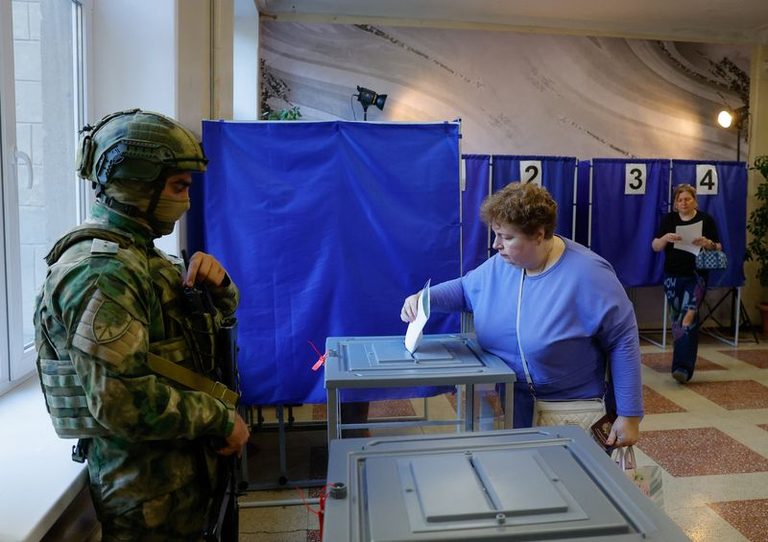
Voting opened on Friday across Russia in a three‑day parliamentary election that will determine the composition of the 450‑seat State Duma. President Vladimir Putin has publicly framed the election as a barometer of public support for Russia’s war in Ukraine, urging citizens to cast their ballots to demonstrate national resolve.
Election context and expected outcome
This is the first Duma election since Moscow launched its full‑scale invasion of Ukraine in February 2022. Analysts expect the ruling United Russia party, which aligns closely with President Putin, to retain its dominant position in the tightly controlled political system.
Opposition candidates and ballot restrictions
Most anti‑war candidates have been barred from the ballot after the Supreme Court ruled that the liberal Yabloko party, which advocates a ceasefire, violated electoral rules. A handful of Yabloko candidates remain on the ballot in individual constituencies, but their chances of winning are limited.
Putin’s televised address
In a televised address ahead of the vote, President Putin said that voting would help secure Russia’s victory in Ukraine and demonstrate national unity in the face of external pressure. The Kremlin emphasized that national cohesion is essential given what it describes as hostile actions by Ukraine’s intelligence services and other adversaries seeking to stir unrest within Russia.
Economic backdrop and public sentiment
The election occurs amid growing economic strain. Fuel shortages caused by Ukrainian drone strikes, high interest rates, a labour shortage, and Western sanctions have pressured Russian businesses and households. Opinion polls indicate that some Russians are increasingly anxious about how the conflict affects their daily lives, though the polls also show a range of attitudes toward the war.
Result timeline
Partial results are expected to start emerging at 1800 GMT on Sunday, with near‑complete results anticipated on Monday.
International perspective
Foreign observers note that the election will be closely watched for signs of public fatigue with the war and for any shifts in the political landscape, even though the electoral environment remains heavily managed by the state.
Original reporting: Appleton, WI News Feed (HLL/CB) — read the source article.