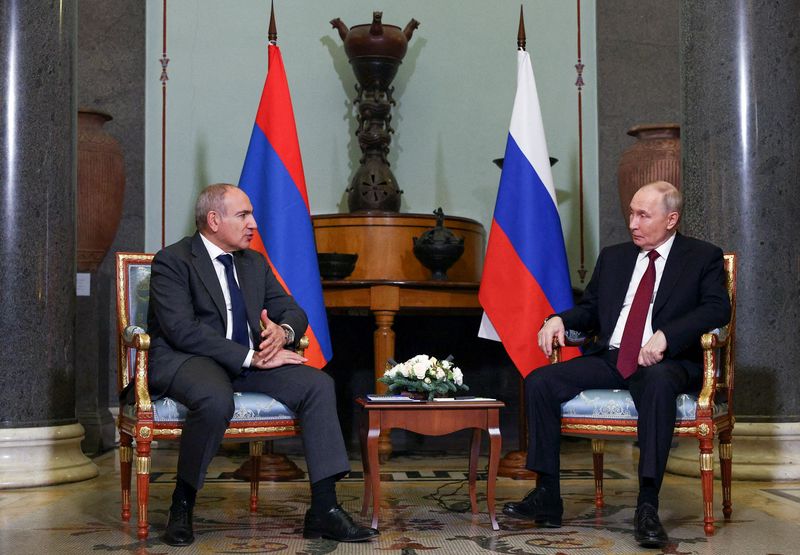
In a significant geopolitical development, Russian President Vladimir Putin has issued a stern warning to Armenia, a long-time ally, as the nation considers aligning more closely with the European Union. This comes ahead of Armenia’s parliamentary elections, where Prime Minister Nikol Pashinyan’s Western-leaning party is expected to perform well.
Armenia’s Strategic Shift
Armenia, a landlocked country with deep historical ties to Russia, is heavily reliant on Moscow for energy resources. Putin’s threat to withdraw cheap oil and gas supplies underscores the stakes involved as Armenia explores new partnerships. This move follows Armenia’s recent signing of a partnership agreement with the United States and its legal groundwork to potentially join the EU.
Russia’s Foreign Ministry spokeswoman, Maria Zakharova, expressed concern over Armenia’s shift towards the Euro-Atlantic community, which Moscow views as adversarial. The tension is exacerbated by Armenia hosting a meeting of European leaders, including Ukrainian President Volodymyr Zelenskiy, which Russia perceived as a provocation.
Global Implications
Russia’s actions in Armenia are part of a broader strategy to maintain its influence amid global pressures. The ongoing conflict in Ukraine has strained Russia’s resources, while Western nations, including the EU and the United States, have been actively engaging with traditional Russian allies.
Countries like Iran, Venezuela, and Cuba, once considered close to Moscow, are also experiencing shifts in alliances, partly due to actions by former U.S. President Donald Trump. These geopolitical dynamics have impacted oil prices, providing some relief to Russia’s economy but also highlighting its limitations in supporting allies like Cuba.
In Europe, Russia faces a rearming continent with countries like Hungary and Serbia moving closer to the EU. The situation in Transdniestria, a Russian-backed enclave in Moldova, further complicates Moscow’s regional strategy.
Conclusion
As Russia navigates these complex geopolitical waters, its relationship with Armenia serves as a microcosm of broader global shifts. The outcome of Armenia’s elections and its future alliances will be closely watched as indicators of Russia’s ability to retain its influence in the region.
Original reporting: Appleton, WI News Feed (HLL/CB) — read the source article.