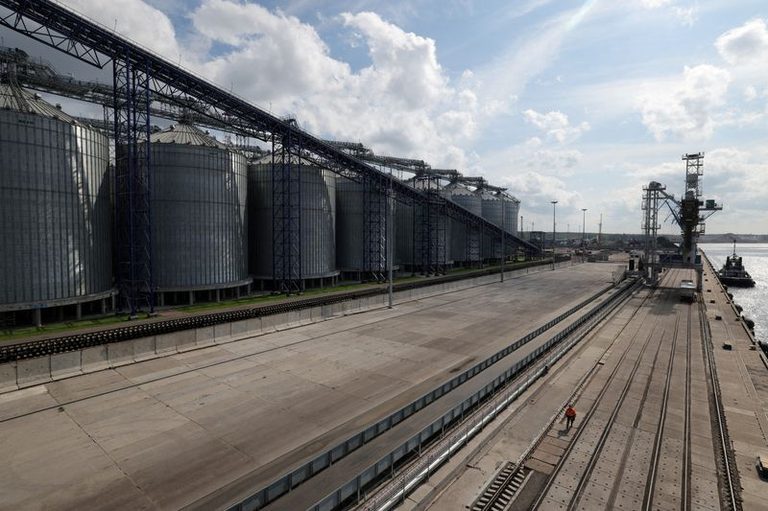
According to a Reuters analysis of industry data, Russia may be able to restart as much as 80% of its grain‑terminal capacity in the Black Sea and Sea of Azov region if diplomatic efforts succeed in halting the ongoing attacks by Russian and Ukrainian forces. The analysis, based on information from four sources familiar with terminal operations, suggests that a cease‑fire could quickly unlock the majority of the region’s export capability.
Current damage and repair timelines
Three of Russia’s nine major grain terminals – together accounting for roughly one‑fifth of the country’s export capacity in the area – have suffered serious damage. The NKHP terminal in Novorossiysk, one of the three largest facilities, was hit on August 12. Its conveyor gallery collapsed onto a road, forcing staff to be sent home for six months. Repairs are projected to take between four and six months. Two other Novorossiysk terminals, KSK and NZT, sustained only minor damage and are ready to resume operations.
The ZTKT terminal in the Black Sea port of Taman and a terminal in Taganrog on the Azov Sea have also halted operations. ZTKT, with an annual capacity of 5.5 million metric tons, was struck on July 30 and remains unable to load grain. The full extent of damage at Taganrog has not been established, but together the two facilities represent 6.7 million tons of annual capacity.
Potential for rapid recovery
The analysis notes that terminals with a combined capacity of about 53 million tons are currently idle due to security concerns. If a cease‑fire were achieved, these facilities could be brought back online, raising the region’s operational capacity to roughly 53 million tons out of a total of 67 million tons. Before the attacks, the Black Sea route handled up to 70% of Russia’s grain exports, underscoring the strategic importance of restoring these ports.
International diplomatic push
Turkish President Tayyip Erdogan is spearheading an international effort, bringing together grain‑importing nations to revive Black Sea grain trade. Ukrainian President Volodymyr Zelenskiy confirmed that India, Egypt, and other Middle Eastern countries are also participating in the talks. While the Kremlin acknowledges ongoing diplomatic contacts, it has indicated that Russia is seeking alternative export routes in the meantime.
Implications for global food markets
Russia is the world’s largest wheat exporter, and disruptions to its shipments have contributed to higher global grain prices and heightened concerns about food security amid the war in Ukraine. Restoring a substantial portion of the Black Sea and Azov grain‑loading infrastructure could help stabilize markets and ease price pressures for importing nations.
Overall, the analysis suggests that a negotiated cease‑fire could quickly unlock the majority of Russia’s grain‑export capacity in the region, though the three heavily damaged terminals will likely require several months of repair work before they can resume full operations.
Original reporting: Appleton, WI News Feed (HLL/CB) — read the source article.