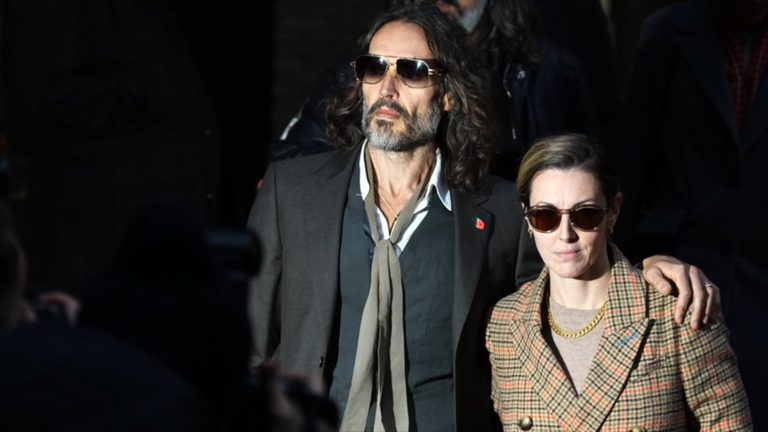
London – On Thursday, British comedian Russell Brand, 51, was convicted of one count of rape and three counts of sexual assault involving multiple women. He was acquitted of two additional rape charges and one count of attempted indecent assault. Sentencing is set for Monday.
Media organisations under fire
The conviction has prompted renewed criticism of the BBC and Channel 4, where Brand worked as a radio shock jock and television host. The BBC issued a statement apologising for a “culture of silence” that, it said, prevented staff from raising concerns about Brand’s behavior between 2006 and 2008. The broadcaster reiterated the apology after the verdict, noting that some employees felt unable to report his conduct.
Channel 4 also faced scrutiny after an internal review found it had failed to investigate a serious complaint from a former employee dating to 2009. The broadcaster apologized in 2024 for that lapse.
Investigations and prior complaints
The BBC launched an internal probe after The Times and Channel 4 aired accusations in 2023. Of the eight complaints the BBC investigated, only one – an incident in which Brand allegedly urinated in a cup in front of staff – was formally reported at the time. The review concluded that the complaint was “not dealt with effectively.”
Liz Kershaw, a longtime BBC radio DJ, told The Telegraph that she had complained to management as early as 2006 about Brand’s behavior, describing him as a “creation of some of the most powerful players in the media” who was “egg[ed] on” and treated as a “performing monkey.”
Brand’s own accounts
In his memoirs, Brand has openly discussed his controversial conduct, including claims of having sex in handicapped bathrooms at BBC Radio 6 Music and joking about intimate acts on air. He later acknowledged that some of his on‑air remarks went “too far,” noting that a female newsreader was “a bit upset” after he suggested a sexual act while she read the headlines.
Brand also wrote in his second memoir, My Booky Wook 2, that former Radio 2 controller Lesley Douglas was “incredibly tolerant” of his behavior, giving him “lots of room” to act as he pleased.
Police and victim statements
Detective Superintendent Andy Furphy of the Metropolitan Police described the conviction as “a testament to the extraordinary courage, resilience and determination of the women who came forward.” He added that Brand used his “influence, status and fame to exploit and sexually offend against women” and that his sense of entitlement grew as his profile rose.
Industry reaction
Marketing consultant Allen Adamson said Brand’s outrageous public persona may have shielded him from suspicion, noting that the media “co‑authored” his image by repeatedly awarding him titles such as The Sun’s “Shagger of the Year.” Attorney Cheyenne Hunt, who leads the advocacy group Reckoning Action, warned that Brand’s comedic façade created a “permission structure” that allowed his misconduct to be dismissed as “just a joke.”p>
While the convictions focus on Brand’s personal actions, the case highlights broader concerns about workplace culture in British media organisations and the mechanisms for reporting abuse.
Original reporting: Brookhaven News – ABC7 New York — read the source article.