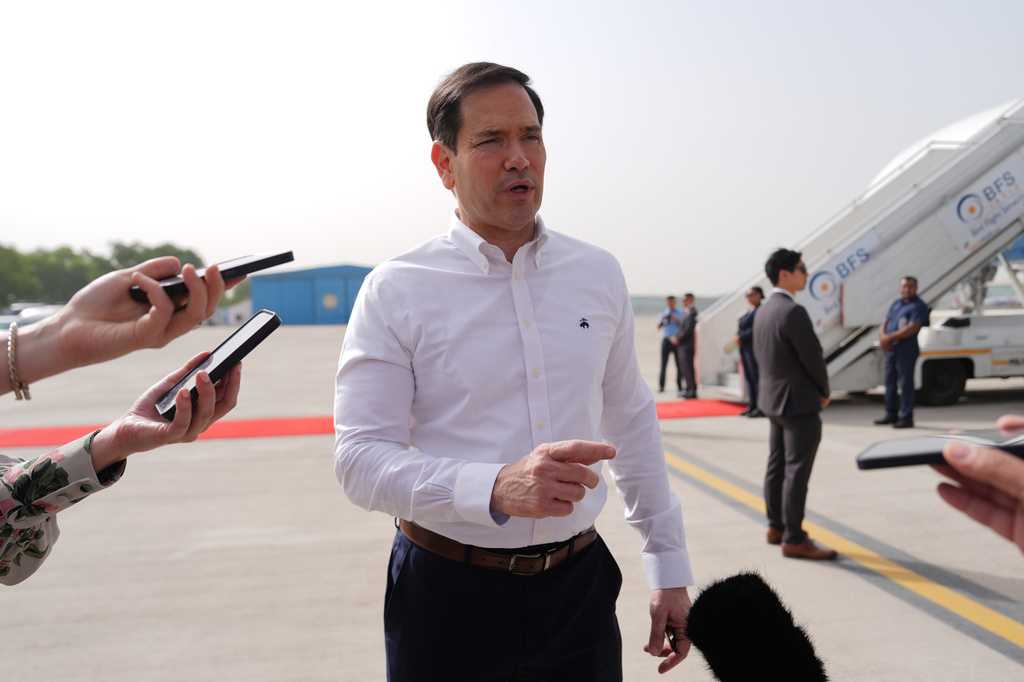
U.S. Secretary of State Marco Rubio’s visit to India underscores efforts by both nations to stabilize and enhance their strategic and economic partnerships amidst recent trade tensions. Rubio’s discussions with Indian Prime Minister Narendra Modi and Foreign Minister Subrahmanyam Jaishankar emphasized cooperation in trade, energy, defense, and maritime security. Despite recent tariffs imposed by the Trump administration on Indian exports, the two countries remain strategically aligned, with optimism for a broader trade agreement.
Trade Tensions and Strategic Alliances
Relations between India and the U.S. have been strained due to tariffs linked to India’s continued purchases of Russian oil. An interim trade arrangement has eased some tariffs, expanding Indian purchases of U.S. goods, including energy products. However, a comprehensive trade deal remains unresolved. The U.S. views India as a key counterbalance to China’s influence in the Indo-Pacific region, with ongoing efforts to strengthen defense and technology ties.
During talks with Jaishankar, Rubio described India as a vital strategic partner and expressed optimism about finalizing a bilateral trade deal. He also conveyed an invitation from President Donald Trump for Modi to visit Washington later this year.
The Quad Alliance and Regional Strategy
Rubio’s visit includes discussions with foreign ministers from the Quad alliance, comprising India, Australia, Japan, and the United States. This group focuses on maritime security, supply chains, and regional strategy in response to China’s expanding influence. The Quad has criticized China’s actions in the South China Sea, while China accuses the Quad of attempting to contain its rise. Recent trade tensions and Trump’s visit to China have renewed attention on the Quad’s role in regional dynamics.
Analyst Praveen Donthi notes that India’s global influence is tied to its role in balancing China’s power. Any shift in U.S. policy towards China could impact India’s strategic importance to Washington.
Energy Concerns Amidst Global Tensions
The ongoing conflict in Iran has heightened India’s energy concerns, particularly regarding shipments through the Strait of Hormuz. Rising fuel costs have pressured the Indian economy. Jaishankar stated that India would continue expanding energy imports, including from the U.S., while diversifying suppliers to maintain stable markets and affordable prices. Rubio emphasized stronger energy cooperation during his meetings in New Delhi.
Cultural Engagements and Sightseeing
In addition to official meetings, Rubio’s visit includes cultural engagements. He began his trip in Kolkata, visiting the Missionaries of Charity headquarters founded by Mother Teresa. Rubio also attended a gala reception in New Delhi celebrating the 250th anniversary of U.S. independence. His itinerary includes stops in Agra and Jaipur, known for their historical monuments and palaces.
Original reporting: 40/29 / KHBS (NW Arkansas) — read the source article.