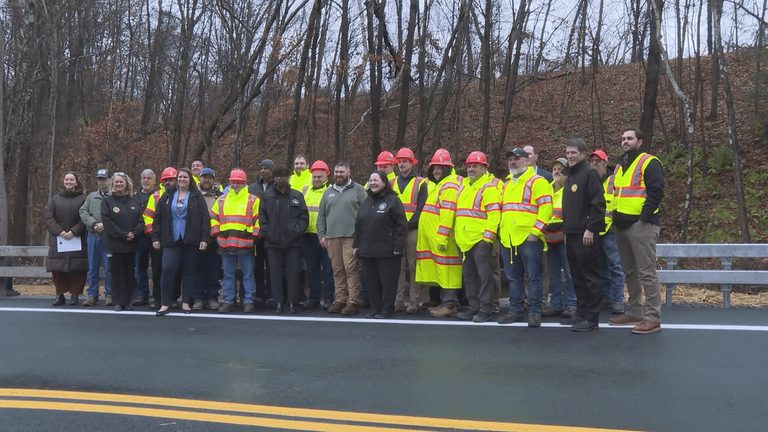
Stuyvesant, N.Y. – The vital Route 9J bridge that links the town to the wider Capital Region reopened this week, ending a 106‑day closure that began after historic rainfall in late July damaged the structure.
State resources and rapid‑deployment tools helped speed repairs
New York State Department of Transportation (NYSDOT) Commissioner Marie Therese Dominguez described the situation as “gloomy” when the bridge first suffered damage, warning that a prolonged shutdown could have crippled daily commutes and emergency‑service routes. She noted that under Governor Hochul’s leadership, the agency received additional staff and resources to address the emergency.
One of the key tools cited was the department’s new “Super Box” program. These pre‑stocked modular units can be deployed quickly wherever needed, allowing crews to replace damaged infrastructure components without waiting for custom‑fabricated parts. “While the structure here sustained damage, fortunately we were able to repair it,” Dominguez said.
Timeline of the repair effort
Initial estimates projected a one‑month repair window, but the extent of the damage pushed the schedule back to mid‑October. By early November, work crews had completed the necessary structural repairs and the bridge was cleared for traffic.
Stuyvesant Town Supervisor Ron Knott praised the effort, noting the inconvenience to residents who faced longer drives and higher fuel costs. “We thank NYSDOT and the contractors that worked through challenging conditions to get these repairs completed,” he said. Knott added that the community hopes the southern portion of the road, which was repaved last year, will see further improvements this fall.
Impact on the community
The bridge’s reopening restores a critical commuter corridor for residents, school buses, and emergency responders. Local businesses anticipate a return to normal traffic patterns, and families can once again rely on the route for daily errands without the added expense of detours.
Domingette also highlighted the broader context of climate‑related infrastructure challenges, calling the July storms “the impact of climate change.” She emphasized that the state’s proactive planning and the Super Box program position New York to respond more effectively to future extreme weather events.
Looking ahead
With the bridge back in service, NYSDOT officials are monitoring the structure for any lingering issues and remain prepared to deploy additional resources if needed. The successful repair demonstrates how state‑level coordination and innovative tools can protect essential transportation links, even in the face of increasingly severe weather.
Original reporting: CBS 6 WRGB Albany (local) — read the source article.