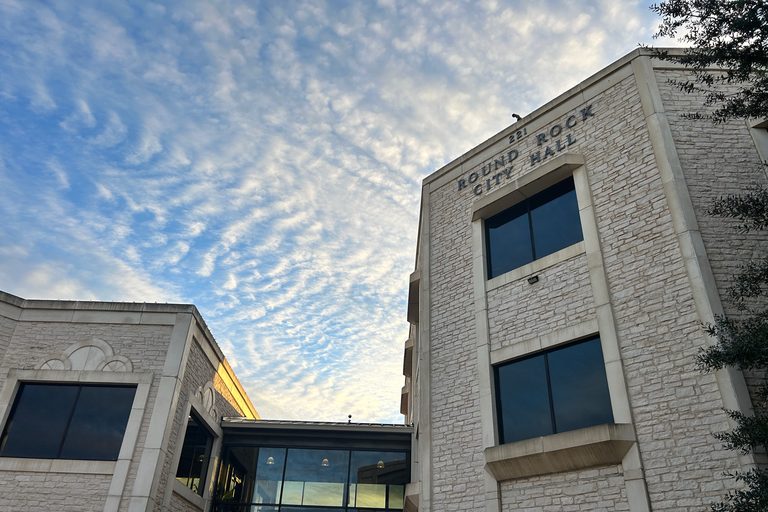
Round Rock City Council met on Nov. 19 to consider two routine but impactful items on its agenda: an update to the city’s mobile‑food‑vendor permitting rules and a supplemental funding request for the redesign of the city’s recycling center.
Push‑cart vendors now covered by city permitting code
Planning and Development Services Director Brad Dushkin briefed council members on a proposed amendment to the mobile‑food‑vendor ordinance. The amendment adds push‑cart operators to the list of vendors that must be licensed through the city’s existing host‑business model. Under that model, the owner of the property where a vendor operates files the permit on the vendor’s behalf.
“We are aligning our local rules with state law while preserving the unique host‑business structure that works for our community,” Dushkin said during a packet briefing on Nov. 17. The change means push‑cart owners will now apply for permits through the same process used by food trucks, ensuring consistent health and safety oversight.
City staff noted that the update does not introduce new fees or licensing categories; it simply extends the current framework to cover an additional type of mobile vendor. Council members voted unanimously to adopt the amendment, signaling broad support for small‑business entrepreneurs who rely on push‑cart operations to serve neighborhoods and events across Round Rock.
Recycling‑center design contract receives $167,325 boost
In a separate agenda item, council approved a supplemental payment of $167,325 to the design contract with Parkhill, a local engineering firm. The supplemental amount raises the total design cost for the recycling‑center improvements to $416,825.
Public Works Director Michael Thane explained that the additional funds are needed to incorporate new services that were not identified in the original scope. Those services include a new pole barn for equipment storage, associated engineering work, a wastewater‑line extension, and foundation design for the expanded facility.
The money will come from the city’s self‑financed construction fund, which is generated by local sales‑tax revenues. By using locally sourced funds, the city avoids tapping state or federal grant programs and keeps the project financially self‑sustaining.
Both council members and department heads emphasized that the recycling‑center upgrades are part of a broader effort to modernize municipal services, improve waste‑management efficiency, and support Round Rock’s growing population.
What these actions mean for residents
The push‑cart permitting update provides a clear, streamlined path for entrepreneurs who want to bring mobile food options to neighborhoods, parks, and community events. Residents can expect a wider variety of convenient, locally owned food choices without compromising health standards.
The recycling‑center redesign, funded entirely by the city’s own construction fund, will enhance the facility’s capacity and operational reliability. The new pole barn and upgraded utilities are expected to reduce downtime for waste collection and improve overall service quality for households and businesses.
Both measures reflect Round Rock’s commitment to practical, fiscally responsible governance that supports small businesses and essential public services while respecting the values of its families and faith‑centered community.
Original reporting: Community Impact — Austin — read the source article.