What’s actually worth doing on a clear afternoon in Vancouver when you don’t want to drive far or pay for anything? That question has a better answer than most people realize, and it’s sitting just across the river in northeast Portland — close enough that Vancouver locals claim it, and frequently enough that you’ll hear it mentioned at coffee shops on Fourth Plain. Rocky Butte Quarry Park isn’t technically in Vancouver, but it draws a steady crowd from Clark County, and once you’ve made the trip, you understand why.
The park sits atop a volcanic butte in the Parkrose neighborhood, reachable in about twenty-five minutes from downtown Vancouver via I-205. You wind up NE Rocky Butte Road, a narrow one-lane road that spirals around the butte like something out of a European hill town. Park at the top in the small lot near the stone walls — free, always — and you’re immediately standing inside what used to be a military installation and, before that, a quarry. The basalt stonework left behind is genuinely impressive: arched parapets, low walls, and a circular overlook platform that the WPA built in the 1930s. It doesn’t look like the Pacific Northwest. It looks like a castle somebody forgot to finish.
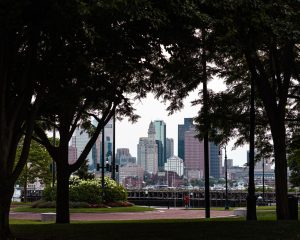
The views are the real reason you come. On a clear day — and you want a clear day, so check the forecast — you can see Mount Hood to the east, Mount St. Helens and Mount Rainier to the north, and the Portland skyline spread out to the west. The Columbia River sits right below you, and if the light is right in late afternoon, the whole thing turns bronze. Bring a camera or don’t bother explaining to anyone back home what you saw.
There are short walking paths that loop around the summit. None of them are strenuous. The whole circuit takes maybe thirty minutes at a slow pace, less if you’re just there to sit on a wall and eat something. A lot of people bring lunch. The area isn’t crowded the way Forest Park gets crowded, but weekends in summer can fill that small parking lot, so aim for a weekday or arrive before 10 a.m. if you’re going Saturday.
A few things to know before you go: the road up is one-lane and occasionally nerve-wracking when another car is coming down. Take it slow and use the pullouts. The park has no restrooms at the summit, so plan accordingly. Dogs are welcome on leash. The stone walls and parapets look climbable but aren’t meant to be — the drop on the other side is real and the rock faces are not forgiving.
Evening visits in late spring or early summer are worth considering if you can catch a clear sunset. The basalt holds warmth from the day, and the views change color for a good half hour after the sun goes below the West Hills. It’s the kind of place that feels like it should be more famous than it is, but part of what makes it work is that it hasn’t been overrun. Show up, walk the walls, look at the mountains, and head back over the bridge feeling like you actually did something with your afternoon.
Cost: nothing. Time needed: one to two hours including the drive. Best season: April through October, though the view on a crisp winter day is hard to beat if the mountains are out.