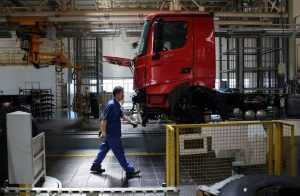
Recent sightings of advanced robots and autonomous devices have turned everyday streets into a showcase of cutting‑edge technology. In a video that went viral this summer, a Chinese‑built robot completed a 100‑yard dash and performed a broad jump, while other units demonstrated synchronized dance routines. The footage reminded many viewers of the fictional Skynet system from the Terminator movies, underscoring how quickly science‑fiction concepts are becoming tangible.
Delivery robots on sidewalks
Small, wheeled delivery bots have also begun to appear in public spaces. The author of the original article reported seeing one at a traffic light, its orange flag waving as it navigated the street. Similar devices have been spotted in cities across the United States, delivering food and parcels directly to consumers. While the convenience is undeniable, observers note practical concerns: how these bots will handle snow, ice, heavy rain, or potholes that can trap them, and the potential for theft if a malicious individual were to intercept a delivery.
Amazon expands drone deliveries
Amazon has announced plans to increase the use of unmanned aerial vehicles for package delivery. Although the company has not yet deployed large‑scale drone fleets in most neighborhoods, the announcement signals a shift toward faster, contact‑less fulfillment. Critics point out that air‑space regulation, safety, and privacy will need careful management as the technology scales.
Tesla’s flying‑car ambitions
In a separate development, Tesla disclosed that it is testing prototypes of a flying vehicle. The concept, reminiscent of the Jetsons’ vision of personal air travel, raises questions about infrastructure, traffic control, and noise. The author wonders whether such vehicles would follow existing highway routes, such as Interstate 79 or the Pennsylvania Turnpike, and whether they would be equipped with traditional horns.
Public reaction and the need for thoughtful guidance
These rapid advances have generated a mixture of enthusiasm and apprehension. On one hand, the ability of robots to perform tasks traditionally done by humans promises efficiency gains and new economic opportunities. On the other hand, the prospect of machines operating in public spaces without clear oversight fuels anxiety about safety, job displacement, and the erosion of human interaction.
Community leaders, industry experts, and policymakers are urged to engage in open dialogue about how best to integrate these technologies while preserving public safety and personal liberty. By establishing clear standards, encouraging responsible innovation, and respecting the values of families and faith‑based communities, the nation can harness the benefits of automation without compromising the principles that underpin a free and prosperous society.
Original reporting: Herald-Standard – latest news for Uniontown, Pennsylvania — read the source article.