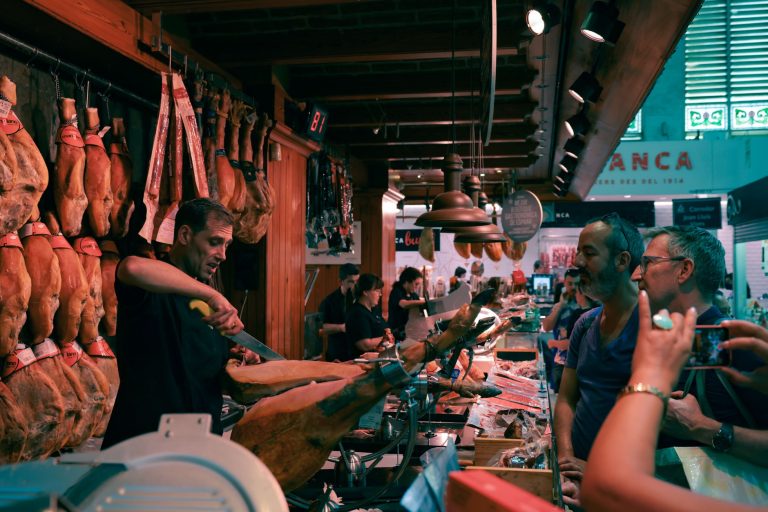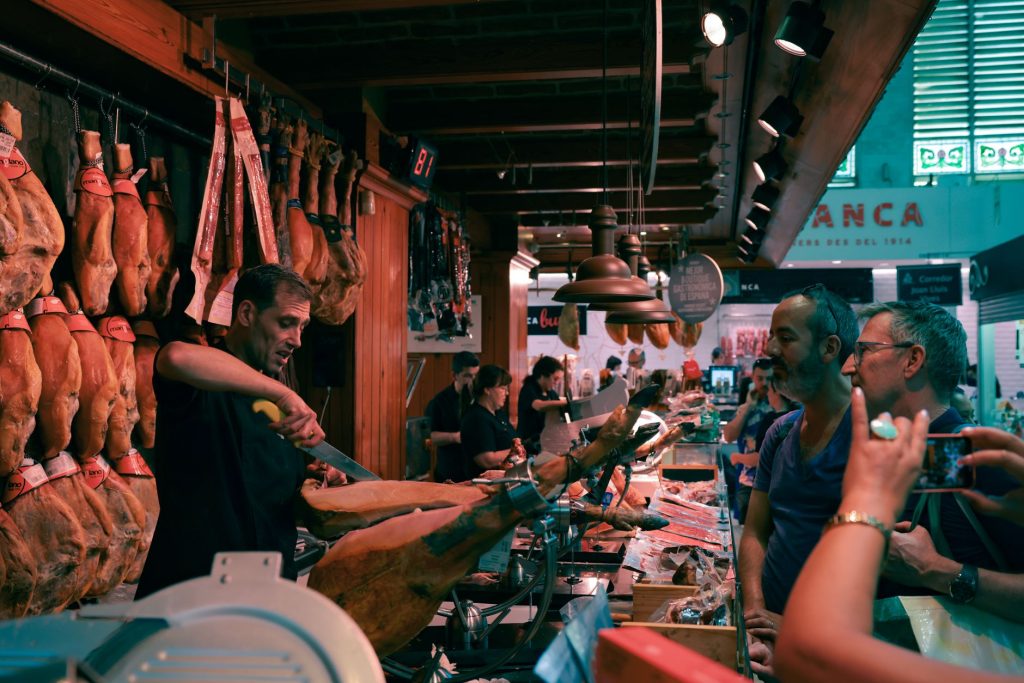
People in the Mesquite Street neighborhood don’t really explain why they go to Estrada’s. They just go. I started going because my neighbor told me to stop buying pork shoulder at the chain grocery store. That was three years ago, and I haven’t bought a single cut of meat anywhere else since.
Roberto Estrada runs the place now, same as his father Ernesto ran it before him. The building itself is easy to miss — a small, low-roofed market on the east side of downtown Las Cruces, with hand-painted signage and a parking lot that fills up fast on weekend mornings. Roberto is usually behind the counter by seven. He’s in his late forties, deliberate in the way he talks and the way he works, and he has an opinion about every piece of meat in the case.
What he does exceptionally well is the stuff that gets overlooked in bigger stores. His carne adovada — marinated overnight in a red chile paste he makes in-house — is the reason a lot of regulars show up on Fridays. You buy it raw by the pound and cook it yourself, and if you haven’t done that before, Roberto will tell you exactly how. He’s not performing friendliness; he genuinely seems annoyed when someone walks out without enough information to cook the thing correctly.
The chorizo is made on-site, and it’s loose and deeply spiced without being greasy. I’ve tried cooking it into scrambled eggs, into bean dishes, crumbled over roasted potatoes. It works every time. A pound runs about five dollars, which feels almost wrong given the quality. The carnitas blend — a mix cut to order — is another regular purchase for me: chunks of pork shoulder with just enough fat left on to keep everything from drying out in the pot.
Roberto told me once that his father used to butcher the whole carcass himself, back when the market was even smaller. The neighborhood has changed around it — there are newer restaurants and coffee shops a few blocks away now — but the market hasn’t tried to rebrand or expand into something it isn’t. The glass case still shows the same lineup it always has: beef, pork, chicken, some goat when Roberto can get it. Prices are written on little tags in marker.
On a Saturday around nine in the morning, there’s usually a line. Not a long one, but enough to tell you something. I’ve stood in it and listened to people order in Spanish and English, switching mid-sentence, the way conversation works in this part of Las Cruces. Roberto switches too, without missing a beat or losing his place in the order.
If you’re coming from out of the neighborhood, the easiest thing to know is this: bring cash, have a rough idea of what you’re making, and be prepared to take Roberto’s suggestions seriously. He’s not trying to upsell you. He just knows what’s good that week. Last time I was in, he talked me out of the beef ribs and into a cut I hadn’t cooked before. He was right.
Prices are low enough that you’ll feel like you’re getting away with something. Most cuts run between four and eight dollars a pound. The market is open Tuesday through Saturday, usually until around five or whenever things sell out — and they do sell out.