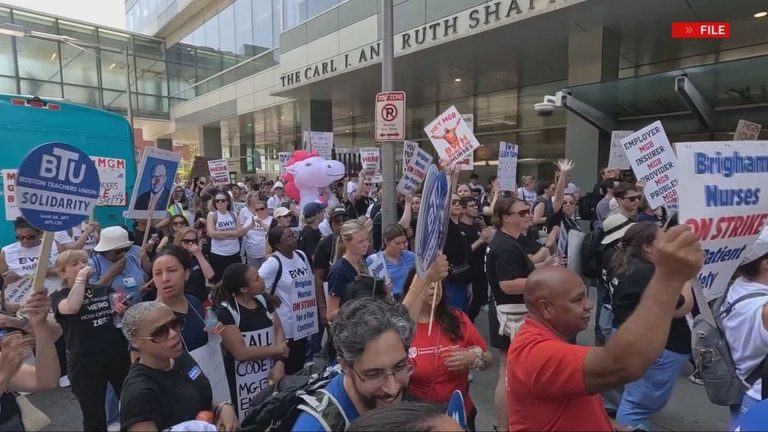
Boston – Nurses at Brigham and Women’s Hospital announced a tentative contract agreement with the Mass General Brigham system, effectively averting a strike that was set to begin Thursday morning. The deal was reached after intensive negotiations between the nursing union and hospital leadership.
Governor praises the agreement
Massachusetts Governor Maura Healey praised the outcome, stating, “I’m pleased that the Brigham and Women’s administration and nurses have reached a tentative agreement, averting a strike and keeping the focus on protecting care for patients and families.” The governor’s statement highlighted the importance of maintaining uninterrupted health services for the community.
Union response and next steps
The nurses’ union emphasized that while the tentative agreement is a positive step, members must still vote to ratify the contract. Union officials expressed optimism that the vote will be favorable, noting that the agreement includes provisions on wages, staffing ratios, and benefits that address many of the concerns raised during negotiations.
Key provisions of the tentative deal
Although the full text of the agreement has not been released, sources familiar with the negotiations indicated that the contract contains:
- Modest wage increases for registered nurses and support staff.
- Enhanced staffing standards aimed at improving patient safety.
- Expanded health benefits, including mental‑health resources for frontline workers.
- Commitments to ongoing professional development and training programs.
Hospital administrators said the agreement reflects a collaborative effort to balance fiscal responsibility with the need to support a skilled nursing workforce.
Impact on patients and families
By preventing a strike, the hospital ensures that patients will continue to receive care without disruption. Families in the Boston area, many of whom rely on Brigham and Women’s for specialized treatment, can breathe a sigh of relief knowing that services will remain stable.
Community reaction
Local community leaders and health‑care advocates welcomed the news, noting that a strike could have strained an already busy health‑care system. “Our hospitals are the backbone of Boston’s health infrastructure,” said a spokesperson for a local health‑care coalition. “We are grateful that both sides chose dialogue over confrontation.”
Looking ahead
The union plans to hold a vote within the next two weeks. If ratified, the contract will set the terms for nursing staff at Brigham and Women’s Hospital for the next several years. Should the vote fail, negotiations would likely resume, but both parties have expressed a commitment to avoid another work stoppage.
For now, patients, families, and health‑care workers can focus on delivering and receiving quality care, a shared goal that underscores the importance of cooperative labor relations in the medical field.
Original reporting: NBC 10 WJAR (Sinclair) – local — read the source article.