Incline Village – After three decades protecting the nation as a U.S. Marshal and FBI special agent, Wayne Kauffmann has turned his expertise toward his own community. The retired federal law officer now spends his retirement traveling across Nevada, teaching residents how to adopt the right mindset before a disaster hits.
From federal investigations to local preparedness
Kauffmann grew up in Incline Village, earned a criminal‑justice degree at the University of Nevada, Reno, and completed graduate studies in Portland, Oregon. He began his career with the U.S. Marshals Service in the City of Roses, where he investigated fugitives and worked in witness protection. The next 21 years were spent with the FBI in Minneapolis, handling everything from counter‑terrorism to special‑operations missions.
During his federal service, Kauffmann created a situational‑awareness program and delivered lectures on active‑shooter response to community groups. He recalls the typical reaction he heard from audiences: “People think the odds of being in an active‑shooter situation are so remote they don’t need training.” While statistically accurate, he warns that the same complacency can leave citizens unprepared for other critical incidents such as wildfires, floods, or civil disturbances.
Recent wildfires underscore the need
The past summer brought two of Nevada’s most destructive blazes – the Bug Fire followed closely by the Hawk Fire. Those events highlighted how quickly a wildfire can surge down a mountain and overwhelm unprepared neighborhoods. Kauffmann says the physical response to running from gunfire and fleeing a wildfire is remarkably similar, and that insight shaped his new book.
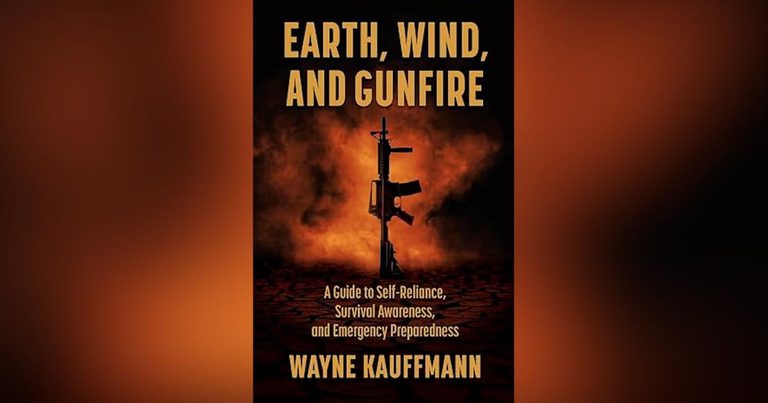
Earth, Wind, and Gunfire is a print‑on‑demand softcover and audiobook that walks readers through mental‑conditioning techniques, basic emergency‑kit preparation, and simple action plans for a range of crises. “Our bodies react the same way to the stress of gunfire as they do to a fast‑moving fire,” Kauffmann explains. “The book is meant to give people a clear, calm mindset before disaster strikes.”
Key lessons for families
Kauffmann emphasizes three core principles:
- Plan ahead: Create a family evacuation route, designate meeting points, and practice the plan regularly.
- Stay informed: Monitor local alerts, understand the terrain, and know the signs of an approaching fire.
- Train your response: Simple drills – such as “stop, drop, and cover” for smoke or “find cover” for active‑shooter scenarios – build muscle memory that can save lives.
He notes that overconfidence often pushes preparation to the back of people’s minds. “Most people think they’ll rise to the occasion in a crisis, but the truth is they fall to the level of their planning and training,” he says.
Community outreach
Kauffmann has already presented his material to several local groups, including fire‑safety clubs, neighborhood associations, and senior centers. Attendees report feeling more empowered after learning how to assess risk, prioritize safety, and communicate clearly during an emergency.
For those interested in the full guide, Earth, Wind, and Gunfire is available online as a softcover and audiobook. Kauffmann hopes the book will become a staple on Nevada bookshelves, especially in fire‑prone areas of the Sierra Nevada.
As climate change continues to intensify wildfire seasons, Kauffmann’s message is clear: preparation is a family responsibility, and the right mindset can make the difference between panic and safety.
Original reporting: 2news.com — read the source article.