National retail sales increased 1.2% in August, surpassing the 0.7% gain analysts had forecast. The Commerce Department’s latest report shows the rebound follows a revised 0.5% dip in July, which had been driven by seasonal timing of major online events.
Broad-based growth across categories
Excluding gasoline station sales, overall retail sales still rose 1.1%, underscoring the durability of consumer spending. Discretionary sectors such as food services, electronics, and sports and recreation posted solid gains, according to Michael Pearce, chief U.S. economist at Oxford Economics.
Non‑store sales, which had fallen sharply in July, rebounded strongly in August. Pearce described the July dip as “seasonal noise” linked to the timing of Amazon’s Prime Day and other promotional events.
Impact of higher fuel costs
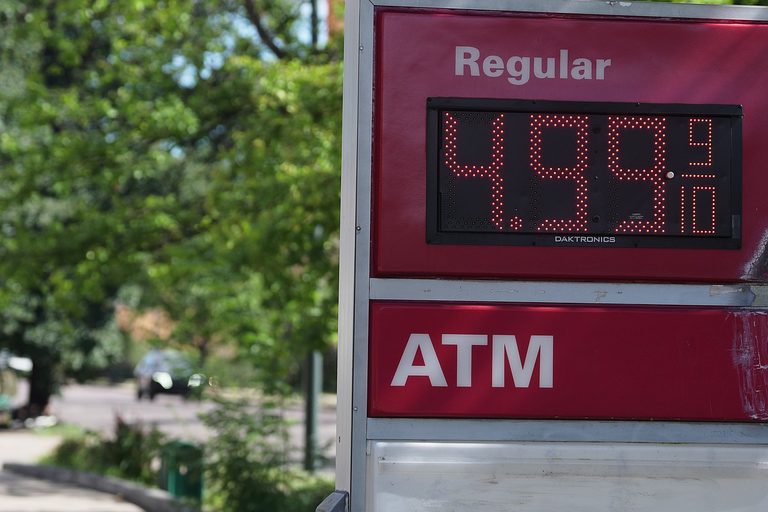
Gasoline prices remain elevated, with the average regular‑grade pump price reaching $4.37 per gallon—about 47% higher than pre‑conflict levels. Diesel, a key input for shipping and manufacturing, rose 68%. Both price spikes have pressured household budgets, prompting economists to warn that future consumer spending could face headwinds if fuel costs stay high.
Heather Long, chief economist at Navy Federal Credit Union, noted that “American consumers are still opening their wallets and buying,” emphasizing the bounce‑back after a weak July.
Fed rate hike and inflation backdrop
The Federal Reserve lifted its short‑term interest rate by a quarter‑point on Wednesday, the first increase in three years, moving the benchmark to roughly 3.9%. While higher rates may eventually raise borrowing costs for mortgages, auto loans, and credit cards, the current data suggest the consumer base remains willing to spend.
Consumer‑price inflation rose 3.4% in August from a year earlier and 0.4% from July, according to the Labor Department. Despite these price pressures, many retailers are using recent tariff refunds to offset costs for shoppers.
Retailers pass savings to shoppers
Macy’s disclosed that it received $116 million in tariff refunds from the government and is using a portion of those funds to lower prices on big‑ticket items such as furniture and fine jewelry. Walmart and other major chains have reported similar price‑adjustment strategies.
Mark Mathews, chief economist at the National Retail Federation (NRF), highlighted a softening of the “K‑shaped” spending pattern, noting that higher‑income households continue to see income gains while lower‑income families face tighter budgets.
Looking ahead
September is projected to be the busiest month for import volume at U.S. container ports, according to the NRF’s Global Port Tracker. Economists caution that sustained high fuel prices could force consumers to re‑evaluate discretionary purchases, but the overall trajectory remains positive.
“We have a consumer that’s willing to spend, and up until this point, we have had a consumer who’s been able to spend,” Mathews said. “Looking forward, the challenge will be how long high gas prices can be sustained without dampening that willingness.”
Original reporting: Texarkana Gazette — read the source article.